Red Belgrade Communist Tour

Reviewed · TOURS

Red Belgrade Communist Tour

5.0 · 78 reviews 4 hours (approx.) From $53 Operated by Serbia Tour Operator · Bookable on Viator
Book on Viator →

Belgrade’s story is messy on purpose, and this tour turns that contradiction into a clear walking path through the communist era. I especially like how the route starts at Trg Republike, then keeps going through real, still-standing symbols of Yugoslavia’s shifts. I also love the included trolley ride that takes you beyond the center to Dedinje and the Museum of Yugoslavia, where the theme stops being abstract and becomes tangible.

One consideration: it is a fair amount of on-your-feet time, and the route is a mix of squares plus uphill stretches. I’d treat this as a proper morning workout, bring good shoes and water, and expect questions. The guides, whether it is Nebo, Dragana, Marko, Radica, or Hristina, tend to set the tone quickly, but the focus can skew heavily toward Tito’s personal story and the museum experience, so if you want only pure ideology, you should go in with that in mind.

Key things you should know before you go

Red Belgrade Communist Tour - Key things you should know before you go

  • Short, focused 4-hour route that fits well into a first visit to Belgrade
  • English-speaking guide with lots of room for questions
  • Trolley ride plus Museum of Yugoslavia entry are built into the price, so you are not piecing it together
  • Republic Square and Terazije give you the city center political mood fast
  • Tito’s gifts and the House of Flowers make the era feel personal, not just historical
  • Group size stays capped at a maximum of 25, which usually keeps the experience friendly

Republic Square to Trg Republike: Tito’s Yugoslavia begins in plain sight

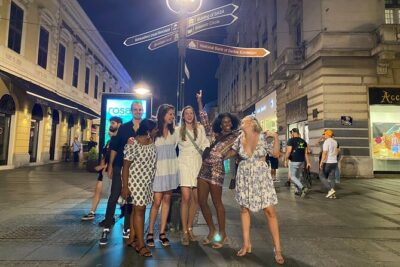
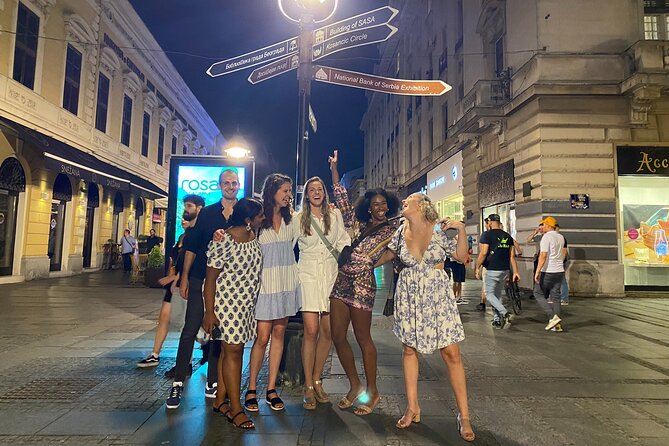
You start at Republic Square, Trg republike, right where the public stage for a new state identity was set. This is not a quiet “facts only” start. Your guide frames the era as something people lived through for decades, with a touch of fairy-tale nostalgia from those who grew up with Tito as a towering figure.

A big reason this beginning works is the mix around you. You will see the socialist-era buildings alongside monuments from earlier periods, plus more recent structures that reflect the last decades. That layering matters, because Yugoslavia was never one single clean story. It kept changing the rules, the symbols, and who got to feel proud.

In the square itself, the tour points to the moment when Tito’s speech acted like an overture for the Socialist Federal Republic of Yugoslavia. The guide’s job here is to help you read the buildings and spaces like cues in a movie, not like random landmarks. It is also where you get the tone of the tour, with a comrade-style voice that fits the theme and helps you loosen up.

What I like for you: this stop turns Belgrade into a classroom without killing the fun. You walk away with a mental timeline before you ever reach the more museum-heavy part.

Watch-outs: if you are expecting only strict political history, you might feel the tour also leans into cultural mood, nostalgia, and urban legends. That can be a plus, but it is worth knowing.

Filling out a Belgrade stay? Consider these too:

Terazije Square and Hotel Moskva: glamour, work culture, and famous names

Red Belgrade Communist Tour - Terazije Square and Hotel Moskva: glamour, work culture, and famous names
From Republic Square you move toward Terazije, another key civic space in the center. Here the tour focuses on celebrations, glamorous holidays, and the way public life in Yugoslavia shaped status and identity. You also get specific attention to Hotel Moskva, a name that sits in Belgrade’s memory like a spotlight.

You will also pass the area associated with the former square of Marx and Engels, with the Trade Union Hall nearby. The tour connects these symbols to the Yugoslav ideal of work, and it uses vivid human examples to show how the state narrative played out in real life. One story line includes how a single miner became a superstar, which is a clever reminder that communist messaging was not only about speeches. It was about heroes, media, and social approval.

This part of the walk is a good reset. Compared to the Republic Square segment, it feels less solemn and more “life in the system.” You get a sense of how people could enjoy public culture while the political structure remained rigid underneath.

What I like for you: you learn how ideology showed up in everyday rituals and celebrity culture, not just in official buildings.

Possible drawback: if you prefer a heavy, uninterrupted focus on ideology, this stop can feel more story-driven and personality-driven than policy-driven.

Pionirski Park: the Pioneer oath, the claim of liberalism, and the darker edges

Red Belgrade Communist Tour - Pionirski Park: the Pioneer oath, the claim of liberalism, and the darker edges
Next comes Pionirski park, and this is where the tour gets very human. The centerpiece concept is the ritual of the pioneer oath. Your guide uses this to explain the socialist youth system and how it tried to create loyalty, shared values, and a sense of belonging from an early age.

Then comes an interesting twist. The tour presents the idea that the socialist regime in Yugoslavia was the most liberal within its political system, and it points to Western influence, including how music affected lifestyle. That theme is a reminder that Yugoslavia did not treat culture like a simple switch. Even in a controlled environment, tastes and pop culture still moved.

And yes, the tour also includes the darker parts. You are not pushed to look away. The guide is meant to handle the tension honestly, with stories that acknowledge that freedom and control could exist in the same country at the same time.

As you move around, you will see the monument of Ivo Andrić, a Serbian Nobel Prize writer and a former ambassador in Berlin at the start of World War II. It is one of those “pause and look” moments that helps you zoom out. The story becomes bigger than communism. It becomes about the whole region’s 20th-century pressures and choices.

What I like for you: you get youth indoctrination, cultural compromise, and real-life complexity in one park stop.

Practical note: wear shoes you trust. Park walking can feel easier on flat ground, but the route overall includes enough unevenness that comfort matters.

The trolley ride to Dedinje: public transit as a time machine

Red Belgrade Communist Tour - The trolley ride to Dedinje: public transit as a time machine
After the park, you catch a trolley ride. This is one-way and part of the tour package. Even if you already know the city, the trolley segment gives you a different angle on Belgrade. Your guide uses it as a symbol of the public transportation of the time, while you physically experience the modern city moving around you.

The destination area is Dedinje, an elite district known for embassies and residential villas. You are also headed toward the Museum of Yugoslavia, and that shift matters. Up to this point, the tour is largely in the center where politics is loud and visible. With Dedinje, the story gets quieter, more personal, and more symbolic.

This trolley segment also helps you with logistics. Some visitors find Dedinje tricky to reach on their own in a way that matches museum timing. Here, the tour handles the “how do we get there” problem so you can focus on what you are seeing.

What I like for you: you do not just view history, you move through a believable route that connects the center to the museum area.

Leave Belgrade for a day, differently:

Museum of Yugoslavia: Tito’s life told through objects and big relationships

Red Belgrade Communist Tour - Museum of Yugoslavia: Tito’s life told through objects and big relationships
The Museum of Yugoslavia is where the tour shifts into its biggest focus. It is devoted to Josip Broz Tito and his life and deeds, and the guide uses the collection and stories to bring you through the final era as well as the myth-making that surrounded him.

One reason this museum works so well on this tour is the way objects carry meaning. You will see ceremonial presents given to the Yugoslav president. One standout example is a gift from the crew of Apollo 11. That detail alone helps you grasp how Tito’s Yugoslavia positioned itself on the world stage, not just as a regional power, but as a player in Cold War-era prestige.

As you listen, the guide connects these diplomatic items to the personal myth and political theatre of the period. It is not only about what Tito did. It is about how he was presented, celebrated, and used as a national symbol. The story then reaches the end, too, which keeps the museum from feeling like a museum brochure.

How long this part lasts: the museum stop is about 1 hour 30 minutes, with admission included. That is enough time for the guide to explain what matters and for you to look at objects without feeling rushed off to the next location.

Possible drawback: because this segment is substantial, the tour can feel more Tito-centered than “communism in Serbia” in the broadest sense. If your main goal is communism as an ideology and system, this may still satisfy you, but you should expect Tito’s personal narrative to be the anchor.

House of Flowers: the ending that makes the whole story click

Red Belgrade Communist Tour - House of Flowers: the ending that makes the whole story click
At the end, you are introduced to the mausoleum known as the House of Flowers, where Tito is buried. This is the kind of place where the meaning lands fast. Your guide uses it as a closing scene, connecting the ceremonial museum material to the physical reality of where the leader rests.

Even if you came in curious and a little skeptical, the House of Flowers tends to shift your thinking. It is hard to keep history purely intellectual when the tour ends at a real burial site connected to years of state storytelling.

For me, the strongest value here is pacing. The tour starts with public squares, where politics is staged in architecture. Then it moves to youth rituals and cultural messages. Finally it ends in a memorial space where the symbol becomes final. That structure helps you understand why Yugoslavia can feel contradictory, nostalgic, and contested all at once.

What I like for you: you finish the tour with a strong mental image, not just a list of dates.

Price and time: why $53.10 can feel fair

Red Belgrade Communist Tour - Price and time: why $53.10 can feel fair
At $53.10 per person for about 4 hours, this is priced like a mid-range walking-and-transit experience. The key value is that it includes both trolley tickets and entry to the Museum of Yugoslavia. Without those inclusions, the same day would cost more, and you would likely spend time figuring out how to get to Dedinje efficiently.

Group size also helps with value. The tour caps at 25, and many people end up in smaller clusters. That tends to make questions easier and turns the guide into more of a conversation partner rather than a voice at the front.

One practical point: shared tours require a minimum of 2 passengers. If you book as the only person, the operator will inform you and you can choose between canceling with no fees or paying a supplement of 75 percent to keep the tour running. If you hate surprise costs, try to line up a friend or book alongside another traveler.

Also, the start time is 10:00 am and the meeting point is at Trg republike 9. This is a great first-half-of-the-day option because it gives you orientation for the rest of your time in Belgrade.

Who should book this, and who might not

Red Belgrade Communist Tour - Who should book this, and who might not
This tour fits you best if you want a guided path through 20th-century Yugoslavia that mixes political symbols with how people actually lived. It is also a strong pick if you enjoy Tito as a cultural and political figure and want to see how that translated into objects, ceremonies, and memorial spaces.

You will also like it if you want a guide who answers questions patiently. Many guides on this tour, including Nebo and Marko, are praised for taking their time and keeping the pace livable. That matters on a walking day.

On the other hand, you might want to compare options if your priority is communism in Serbia in the broadest, ideology-first sense. The tour title points you there, but the museum segment is the long center of gravity. If you want a wider “system and economy” focus, look for a tour that leans less toward Tito’s personal story.

Practical tips so the morning feels easy

Bring comfortable walking shoes and a bottle of water, because you will spend meaningful time moving between central squares and into park and museum areas. The route can include hills, so good footwear is not optional.

You should also expect a mix of serious topics and lighter storytelling. The tour includes urban legends and conspiracy theories as part of the 20th-century atmosphere, and it includes darker parts too. If that mix feels like your kind of learning, you will have a good time.

One more tip: double-check the language setting when you book. Some people have reported confusion around the tour language, so it is worth confirming English-speaking content before you show up.

Should you book the Red Belgrade Communist Tour?

If you want a solid first-pass orientation to Belgrade’s political symbols, plus a guided visit that you probably would not organize yourself so well, I say book it. The price feels reasonable because you get museum entry and the trolley ride included, and the route keeps you moving through key places in a way that makes the era easier to understand.

I would especially recommend it if you like stories that connect public buildings to real lives, and if you are curious how nostalgia and ideology can both exist in the same landscape. If you are tired of big speeches and you want your history grounded in objects, streets, and a real memorial site, this tour delivers.

FAQ

What time does the Red Belgrade Communist Tour start?

The tour starts at 10:00 am. You meet at Trg republike 9, Beograd 11102, Serbia.

How long is the tour?

It runs for about 4 hours. The walking, squares, and the museum visit add up to that approximate length.

Is the tour offered in English?

Yes, it is offered in English and you will have an English-speaking guide.

What is included in the ticket price?

The tour includes the trolley tickets and entry fee for the Museum of Yugoslavia.

What is the group size limit?

The tour has a maximum of 25 travelers.

What happens if there is only one person on a shared tour?

There is a minimum number of passengers of 2 for shared tour realization. If you are the only guest, a 75 percent supplement may be applied, but at latest 24 hours before the trip you will be offered a choice between canceling for no fees or paying the supplement to keep going.

Same kind of day

Tours, side by side.

Every Tours review →
Novi Sad & Sremski Karlovci Full-Day Tour
★★★★★★★★★★4.7· 1,068 reviews· from $76

Novi Sad & Sremski Karlovci Full-Day Tour

Read our review →
Gems of Eastern Serbia Tour
★★★★★★★★★★5.0· 427 reviews· from $123

Gems of Eastern Serbia Tour

Read our review →
Sremski Karlovci and Novi Sad Full-Day Tour from Belgrade
★★★★★★★★★★5.0· 425 reviews· from $78

Sremski Karlovci and Novi Sad Full-Day Tour from Belgrade

Read our review →
Western Serbia 1-Day Tour of the Key Sites from Belgrade
★★★★★★★★★★4.8· 333 reviews· from $129

Western Serbia 1-Day Tour of the Key Sites from Belgrade

Read our review →
Day Tour to Nis, Serbia with tickets and pick-up
★★★★★★★★★★4.7· 302 reviews· from $93

Day Tour to Nis, Serbia with tickets and pick-up

Read our review →
Golubac Fortress and Iron Gate Gorge Tour
★★★★★★★★★★4.8· 271 reviews· from $117

Golubac Fortress and Iron Gate Gorge Tour

Read our review →
Novi Sad and Sremski Karlovci Tour
★★★★★★★★★★4.8· 267 reviews· from $76

Novi Sad and Sremski Karlovci Tour

Read our review →
Belgrade Big Tour: Top Attractions and Belgrade Neighborhoods
★★★★★★★★★★5.0· 232 reviews· from $72

Belgrade Big Tour: Top Attractions and Belgrade Neighborhoods

Read our review →

The lists this tour appears in

Scroll to Top

Explore Serbia

Every kind of Serbian day out, and the best of each.