
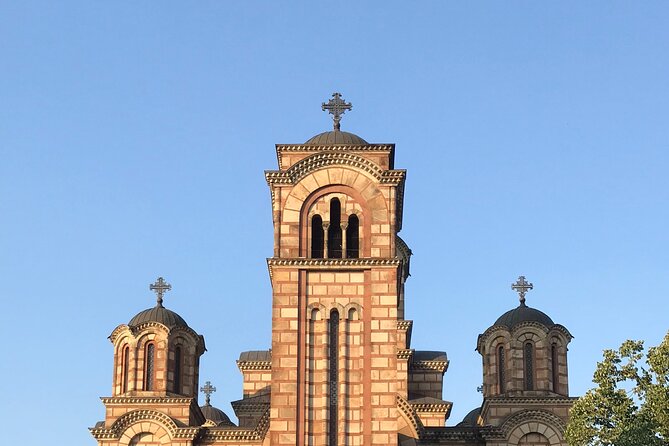
Reviewed · BELGRADE TOURS
Belgrade: The White Emigration in Serbia in the Wake of the Russian Revolution
Russian emigration after the Bolshevik revolution helped redraw Belgrade’s streets, institutions, and even its arts. This 3 hour walk connects the big political story of the White Army in exile with the very physical places you can still see today, from churches to ministries.
What I like most is the way you get a guided, story-driven route that stays grounded in real landmarks, not vague lecturing. I also like the guide, Julja, whose explanations hit the nuances of Serbian history and answer follow-up questions without hand-waving.
One thing to consider: this is history with heavy weight. If you prefer light, photo-only sightseeing, you may find some parts emotionally intense, and there are no snacks or alcoholic drinks included.
Key things you will notice on this walk
- Baron Wrangel’s burial place frames the White Army story in a very tangible way
- Russian architectural fingerprints show up in Belgrade’s civic core, not just old monuments
- The Royal Palace and Nicholas II monument help you understand how dynasties stayed connected
- Hotel Moskva coffee and cakes add a calm break between serious stops
- Theatre and choir culture connect Russian artists to how Serbia remembers talent
- University and the Academy bring emigrant scientists into the conversation
How Belgrade Became a Capital for Russian Exiles
Belgrade is not just a pretty Balkan capital, it also carries a surprisingly specific 20th century story. After the Bolshevik revolution, between 1 and 2 million people left Russia over three years, and up to 100,000 ended up in the Kingdom of Serbs, Croats and Slovenes. That is a big number for a smaller country, and it shows.
This walk is built around a set of questions that actually matter. Why did many emigrants settle in Belgrade? What were Nansen passports, and why do the words come up again today? And how did Serbia host what is described as a fully-trained and even partially-weaponised army of another country without it turning into disaster?
You will not just hear dates. You will learn how a city adapts when a large community arrives with skills, ambition, and culture. Sometimes the result is visible in stone. Sometimes it shows up in institutions, and sometimes in art and music that people still enjoy.
Filling out a Belgrade stay? Consider these too:
- From Belgrade: Novi Sad & Sremski Karlovci Full-Day Tour
★ 4.7 · 1,068 reviews - From Belgrade: Gems of Eastern Serbia Tour
★ 5.0 · 427 reviews - Northern Serbia: Sremski Karlovci and Novi Sad Full-Day Tour from Belgrade
★ 5.0 · 425 reviews
Starting at St. Mark Orthodox Church, and why the route feels logical
You meet at St. Mark Orthodox Church on Bulevar kralja Aleksandra 17. That matters because it puts you immediately in a religious, Eastern Orthodox setting before the tour moves into politics, architecture, and the arts.
The pace is designed for a walking tour, not a museum day. You will move from stop to stop in roughly 15 to 30 minute chunks, with short breaks built into the schedule. You also finish back at the same meeting point, which is handy if you plan to continue on your own afterward.
Tip for your visit: wear shoes that can handle sidewalks and curbs. The experience is short enough that comfort matters. Also, if you like asking questions, this is the kind of tour where your curiosity gets rewarded.
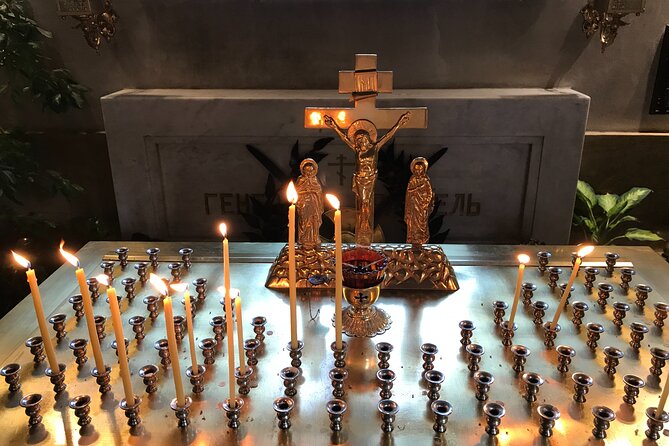
Holy Trinity Church and Baron Wrangel’s burial
Your first stop is Holy Trinity Church, where the tour focuses on the fact that Baron Wrangel is buried there. This is not a random detail. It is a way to anchor the White Army story in a place you can stand in front of, not just a name on a page.
You get about 30 minutes here, with admission listed as free for this part of the experience. In a tour about emigration and exile, starting at a burial site gives the theme a human scale right away. The political story turns into something personal: people lost home, people carried loyalties, and some paths ended far from where they began.
The best way to experience this stop is to let it set the emotional tone for the rest of the walk. After this, you will keep noticing how the city handles memory, from monuments to institutions.
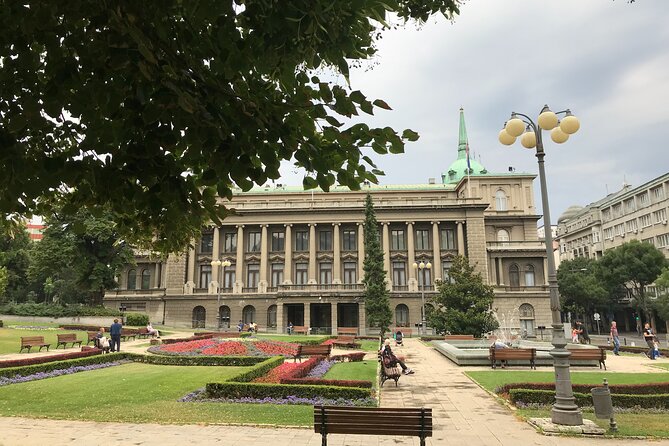
The National Assembly park walk and the Russian architectural footprint
Next you walk through a formerly royal park area toward the House of the National Assembly of the Republic of Serbia. The tour frames this section as a “Russian footprint” in Belgrade’s architecture, and you will see connections in the buildings grouped around the area.
You will also look for Russian contributions in the civic complex, including the post office buildings, the General Staff, and ministries. The point is not just that Russians were present, it is that their design influence helped shape how Belgrade looks and functions in official spaces.
You will spend about 30 minutes here, and admission is listed as free. The practical value for you is that you will start recognizing patterns as you walk: where older power centers sit, how architecture signals authority, and how foreign expertise can be absorbed into a national identity without always getting shouted from the rooftops.
If you care about architecture but find museum galleries too stiff, this is a nice middle ground. You get context while you walk.
Leave Belgrade for a day, differently:
- Day Trip from Belgrade: Gems of Eastern Serbia
★ 5.0 · 424 reviews - Belgrade: Sunset Cruise with Live Guide
★ 4.4 · 418 reviews - Western Serbia 1-Day Tour of the Key Sites from Belgrade
★ 4.8 · 333 reviews - Belgrade Nightlife Bar Pub Club Crawl with Drinks
★ 5.0 · 277 reviews
Royal Palace passing, and why dynasties mattered
At the Royal Palace area, you pass by the Royal Palaces and the monument to Nicholas II. This is a key moment in the tour because it links the refugee story to something older and personal: dynastic relationships.
About 30 minutes here is enough to understand that this was not only about immediate survival. Russian imperial ties had a long memory in how people thought about legitimacy, friendship, and protection. You get a chance to connect that to why Serbia dared to host an organized force in exile, something the tour highlights as surprising even compared with stronger powers.
This stop is also useful for photographers, even if you are not trying to chase perfect shots. The palace area gives you “big city” geometry. And it also gives you a clear visual reminder that Belgrade’s Russian connection is not limited to small plaques.
Hotel Moskva coffee break, plus the Moskva and Aurora cakes
After the heavier political stops, the tour slows down for a more sensory moment at Hotel Moskva. The route here takes you along a street that used to be filled with craft workshops and is now taken over by designers.
Then you get a pause inside the hotel’s luxurious setting, with coffee and the chance to try Moskva and Aurora cakes, prepared according to a half-century-old recipe. You get about 15 minutes for this, which is short enough to keep you moving but long enough to reset your brain.
This part is surprisingly valuable. History tours can become a blur. This break gives you something to do with your hands and taste buds, and it also helps you experience Belgrade as it is now, not only as it was a century ago.
Note: the tour does not include alcoholic beverages or snacks, so if you need more than coffee to stay comfortable, plan accordingly.
National Theatre stop, Russian performers, and Serbian street music memory
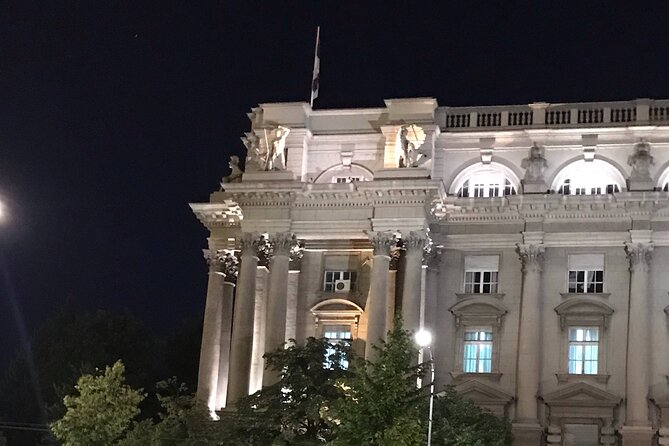
The next stop is the National Theatre, where the focus is on Russian ballerinas and the creative work of scenic designers, choreographers, and directors. In other words, you are not only tracking where people lived, you are tracking what they built in the arts.
You also hear about street songs, and you learn who is worth remembering with kind words when a choir sings in Serbia. That is a gentle shift from politics to culture, but it still fits the theme of legacy.
This stop is about 15 minutes, with admission listed as free. You will walk away with a useful way to read the city’s cultural layers. When a choir sings or when street music pops up in your day, you will know to ask, Who brought this style, and who kept it alive?
If you love theatre or dance, this section is a real highlight. Even if you are not a performing arts person, it is a good reminder that migration changes more than buildings. It changes what people perform and what they consider worthy of applause.
Belgrade University and the Academy: what happens to emigrant scientists
Now the tour turns to education and research, stopping at the Serbian Academy of Science and Art, with views toward Belgrade University. The theme here is the fate of emigrant scientists, which is one of the smartest angles you could take for an emigration story.
Not everyone becomes a soldier or an artist. Some people rebuild their work in a new country, and that tends to leave a quieter trail. This stop gives you that quieter kind of legacy.
You spend about 30 minutes here, and admission is listed as free. The value for you is that you will finish the day understanding the migration impact across multiple categories: military, architecture, royalty, performance, and science.
It also helps you see Belgrade as a city that could absorb different kinds of expertise. That is important when the earlier part of the tour raised the big question of how Serbia hosted an organized foreign force without collapse.
Nemanjina square, Gavrilo Princip, and the First World War connection
Finally you reach Nemanjina, where you talk about the role of the First World War and how the incident connected to Gavrilo Princip played into world history. The tour also notes that you will visit many places that Russian emigrants would have visited a century ago, and these final stops are where that idea becomes real.
This part lasts about 30 minutes. It ties the emigration story back to the war era that caused huge displacement and reshaped Europe. Even without getting lost in extra dates, you will feel the logic: political upheaval leads to movement, movement leads to exile communities, and those communities leave long shadows.
You are also ending in an area that helps you continue your own exploring. If you want to linger in the city after the tour ends back at the meeting point, you now have a better sense of where the Russian connection and the wider European story sit on the map.
Price and logistics, and whether it feels like value
The tour costs $173.64 per person and lasts about 3 hours. That price can sound steep until you look at what you actually get.
You get a guided walking experience with a dedicated story arc, and the route includes multiple major stops across different parts of central Belgrade. Admission is listed as free for the stops along the way, and you also get a coffee break at Hotel Moskva with the chance to try the Moskva and Aurora cakes. You do not get alcoholic beverages or snacks, but that is clearly stated.
You also get group discounts, a mobile ticket, and the tour is private, meaning only your group participates. Private formats often justify the cost if you want more interaction and more flexibility for questions, and this one is strongly built around explanation and Q and A.
If you enjoy history but also like practical “see it, then understand it” travel, this price can make sense. If you prefer museums only, or you hate walking, you might feel the cost more sharply.
Who should book this walk, and who might skip it
Book it if you want a smart way to connect architecture, institutions, and culture to the Russian emigration story. You will get the kind of perspective that makes Belgrade feel less random. You will also leave with names and themes you can carry into the rest of your day.
This works especially well if you:
- enjoy walking tours with a strong narrative
- like political history, but want it anchored to real streets
- care about how arts and science survive displacement
Consider skipping if:
- you want a light, purely scenic tour with minimal political context
- you do not like emotionally heavy historical themes
- you expect snacks or extended breaks built in
Also, if you meet the guide Julja, you are in good hands. The standout praise around her is not just topic knowledge, it is how she communicates the nuances of Serbian history and keeps answers flowing when you ask.
Should you book the White Emigration walk?
I think you should book this tour if you want Belgrade to make sense beyond postcard views. The best part is how the story stays attached to physical places, from a burial site tied to the White Army to the architectural core where Russian influence can be seen, then into theatre, science, and finally a square linked to the First World War era.
If that blend sounds like your kind of sightseeing, it is a strong pick. If you are looking for a casual stroll with minimal context, you may find it too serious for your mood.
FAQ
FAQ
How long is the Belgrade White Emigration walking tour?
It lasts about 3 hours.
Where does the tour start?
The tour starts at St. Mark Orthodox Church, Bulevar kralja Aleksandra 17, Beograd, Serbia.
Is this tour private?
Yes. Only your group will participate.
What’s included in the price?
A guide is included.
What is not included?
Alcoholic beverages and snacks are not included.
Can I cancel for free?
Yes, you can cancel for a full refund if you cancel up to 24 hours in advance of the experience’s start time.
Latest write-ups around Belgrade
- Private Half Day Serbia Tour Novi Sad and Petrovaradin Fortress★ 5.0 · 3 reviews
- Private Wine Tasting by Party in Belgrade★ 5.0 · 3 reviews
- Private Walking Tour of Belgrade and Old Zemun★ 5.0 · 3 reviews
- From Belgrade: Private Nis and Devil’s Town Full-Day Tour★ 4.0 · 4 reviews
- Belgrade center walking tour with Rakija, Cocktails and Burgers★ 5.0 · 4 reviews
- From Belgrade:Uvac Nature Reserve Tour★ 5.0 · 4 reviews
- Novi Sad Saturday Full day trip★ 4.0 · 4 reviews
- Full-Day Private Royal Heritage Tour to Oplenac With a Winery Visit★ 5.0 · 4 reviews
Belgrade Tours, side by side.
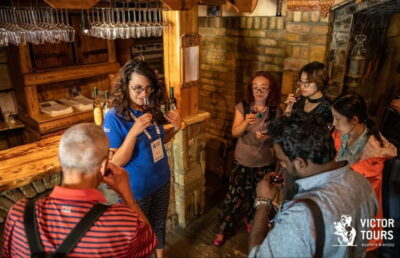
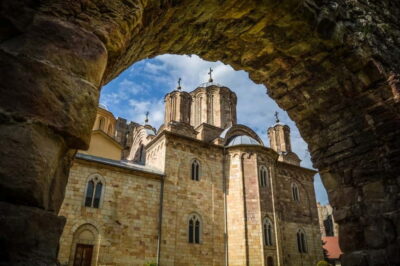
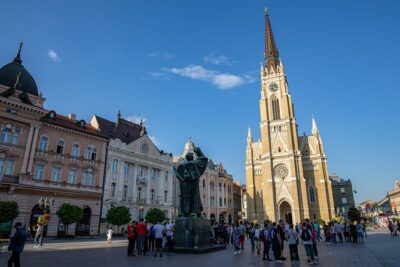
Sremski Karlovci and Novi Sad Full-Day Tour from Belgrade
Read our review →
Western Serbia 1-Day Tour of the Key Sites from Belgrade
Read our review →
Belgrade Nightlife Bar Pub Club Crawl with Drinks
Read our review →
The lists this tour appears in