Reviewed · TOURS
Small Group Tour; Belgrade to Tirana 5 Balkan Countries in 8 Days
This is the kind of Balkan trip that makes sense on paper because the route is tight, but it surprises you in real life with how much you pack in. You start in Belgrade, work your way through Sarajevo, Mostar, Montenegro, and Kosovo, then finish in Tirana with local-food focus.
I like two things a lot. First, the small-group size (max 10) makes it easier to keep your day moving without feeling herded. Second, the mix of big landmarks and real-food time, especially the slow-food agro-tourism stop at Mrizi i Zanave, where you tour the farm and eat a traditional lunch.
One possible drawback: the pace is active and there is plenty of driving. You’ll do walking on uneven terrain in Sarajevo, and the road time can feel long if traffic hits, so pack for an “all day out” mindset.
Key Things You’ll Notice on This Belgrade to Tirana Tour

- Small group (max 10) with hotel pickup makes the days feel organized, not chaotic.
- Mrizi i Zanave slow-food farm adds a food-and-farming break from sightseeing mode.
- UNESCO old towns like Kotor and Mostar give you dramatic historic cores.
- Sarajevo wartime reminders are part of the guided story, including bullet holes and cannon marks.
- Tirana with a local companion shifts the focus to markets, byrek, coffee, and classic Albanian lunch.
Why This 5-Country Route Works
You are not just collecting stamps here. The tour moves along a logical geography and keeps changing “themes” so you don’t get bored. One day is river-and-fortress views. Another day is medieval bazaars and Ottoman-era details. Then you switch to Montenegro’s Venetian-era feel in Kotor and Old Budva. After that you hit Kosovo and Albania with monasteries, fortresses, and vineyards before ending with Tirana’s food culture.
That change of scenery matters because your brain stays awake. It also helps you understand the region as one connected area, not five unrelated countries. Even the practical bits connect: you are on roads with frequent border crossings, so having a guide and transport takes the stress off you.
Filling out a Belgrade stay? Consider these too:
- From Belgrade: Novi Sad & Sremski Karlovci Full-Day Tour
★ 4.7 · 1,068 reviews - From Belgrade: Gems of Eastern Serbia Tour
★ 5.0 · 427 reviews - Northern Serbia: Sremski Karlovci and Novi Sad Full-Day Tour from Belgrade
★ 5.0 · 425 reviews
Price and What $2,754.29 Really Covers

At $2,754.29 per person, this is not a budget sprint. It is priced like a guided, multi-country package where you buy convenience upfront: the transport is handled, hotels and breakfast are included, and entry tickets for the sites that charge are included.
Here’s the value math that matters for planning:
- Included: BB accommodation and breakfast for all overnights (7 breakfasts), a professional guide, transport, and tourist and road taxes plus petrol.
- Also included: entry tickets for the sites that have tickets during the program.
- Not included: lunch, drinks, snacks, souvenirs, and personal spending.
- Single rooms: possible with a 30 Euros extra charge per night per person.
In other words, you’re paying for guided route efficiency and selected admissions, not for every meal. If you like to eat as you go, you’ll want a daily budget for lunches and drinks, and you’ll want to plan to snack.
Belgrade Fortress and Kalemegdan Park, Then Drina River Town Time

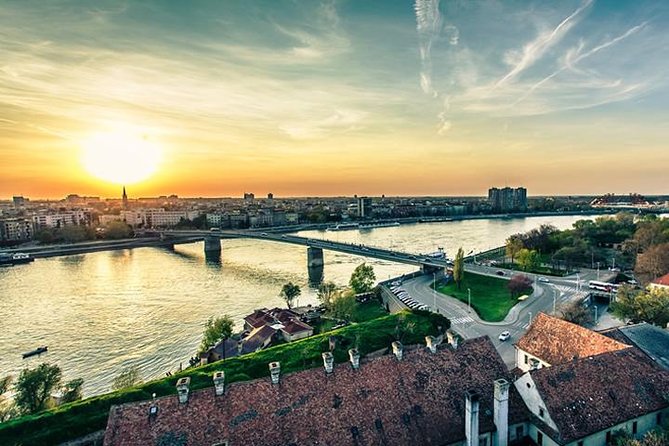
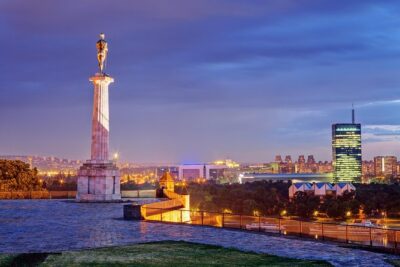
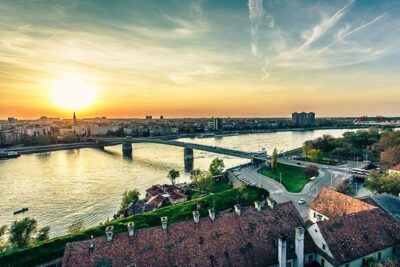
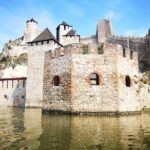
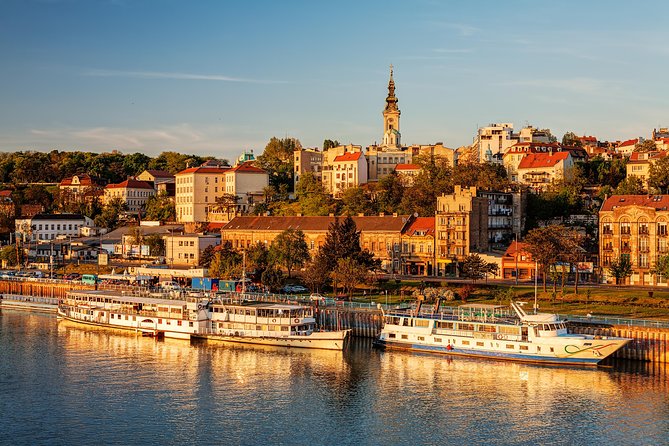
Your tour starts with hotel pickup in Belgrade at 8:00 am, then it’s straight to the parts of Belgrade that tell the story fast. The Belgrade Fortress and Kalemegdan Park sit right at the confluence of the Danube and Sava. The view from the fortress is the kind of first impression that makes the rest of the trip feel worth it.
You also get a guided walk through core landmarks: the Pobednik monument in the Upper Town, then Knez Mihailova down to Republic Square. It’s a good warm-up because it’s scenic but not exhausting. Even if you are arriving fresh from travel, you can get your bearings quickly.
From there, you drive toward Bosnia and stop in Zvornik on the Drina River. This is one of those “useful pause” stops. You get free time for lunch, and you can choose between trying local dishes or doing a relaxed wander through the streets. It’s a calmer moment before Sarajevo ramps up.
Sarajevo’s Wartime Scars, Ottoman and Austria-Hungarian Details, and Latin Bridge

Sarajevo is where the tour turns serious. You’ll walk on uneven terrain, and the guide’s story includes visible remnants from the Yugoslav War, including bullet holes and cannon marks you can still see around town. That isn’t there to scare you. It’s there to explain how the city layers its identity over time.
The tour covers Sarajevo’s Ottoman and Austria-Hungarian areas. You’ll see the urban texture of the city through markets and bazaars, plus the religious mix you notice in mosques, churches, and synagogues. This is also where Sarajevo’s reputation for food shows up in a practical way, because the guided neighborhoods naturally put you near meat dishes and desserts.
Then comes the Latin Bridge stop. This is the famous WWI-trigger story tied to this exact spot, and the tour explains why the bridge got its name, connecting Miljacka and the Catholic quarter once referred to as Latinluk. If you like historical cause-and-effect, this one lands hard.
The stop order also matters. By the time you move on, you’ve already been shown how Sarajevo’s streets and buildings link centuries of rule and religion, then you end the day with a sense of how fast history can flip.
Leave Belgrade for a day, differently:
- Day Trip from Belgrade: Gems of Eastern Serbia
★ 5.0 · 424 reviews - Belgrade: Sunset Cruise with Live Guide
★ 4.4 · 418 reviews - Western Serbia 1-Day Tour of the Key Sites from Belgrade
★ 4.8 · 333 reviews - Belgrade Nightlife Bar Pub Club Crawl with Drinks
★ 5.0 · 277 reviews
Mostar’s Old Bazaar and the Old Bridge Experience

Mostar is the “change pace” city after Sarajevo, even though the story is still layered. You’ll spend time in the Old Bazaar area, where the streets feel like a maze and the city’s memorial markings show up around town.
The tour highlights what makes Mostar visually different: Ottoman-era mosques, Turkish bazaars, and cobbled alleyways that pull you into wandering mode. You’ll have free time to explore the UNESCO site on your own after the guided highlights.
Tip that keeps this day fun: plan for walking time. Even if your feet are fine at the start, this is the kind of place where you’ll keep going because every turn looks like a good photo.
Kotor’s UNESCO Old Town Maze and Saint Luke’s Church

On the Montenegro side, the tour goes to Kotor, another UNESCO old town. The main attraction is the tight network of old streets, where the plan feels chaotic but is said to have been designed to confuse intruders. That detail gives you a new way to look at the streets, not just a place to “take pictures.”
You’ll wander the cobblestone lanes and visit Saint Luke’s church, which holds local significance as a symbol of unity. After that, you get time to explore further on your own, which is important because Kotor can be either a quick walk-through or a slow “just one more street” kind of place, depending on how much you let it absorb you.
Budva’s Old Town, Sveti Stefan Photos, and Shkodra’s Rozafa Castle Views

Budva comes next, and it’s split in a simple way you can feel right away: Old Budva versus New Budva. You’ll focus on the old center and its medieval feel, including stops like St. Ivan church and the small church of St. Mary.
Then you stop near Sveti Stefan. The island is tied to an exclusive residential resort, so you can’t visit everything the way you might expect, but you can still stand by the coast and enjoy the famous view for photos.
Finally, you cross into Albania and reach Shkoder, known for its long habitation and for being near Lake Shkodra, one of the biggest lakes in the Balkans. The tour visit is anchored by Rozafa castle, with a huge payoff: scenery over the lake and the three rivers that merge toward the Adriatic.
One small cultural detail that I love here is the Venetian influence on architecture, plus the note about February carnival and the idea that Venetian masks are handmade and produced in Shkoder. Even if your dates are not February, it adds flavor when you look at the city.
Mrizi i Zanave Slow-Food Farm, Prizren Mosques, and Kalaja Fortress Views

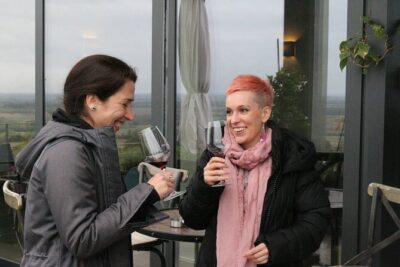
This is one of the strongest days on the whole route because it’s not only monuments. You start at Mrizi i Zanave – Restorant Agroturizëm, one of the best slow-food agro-tourism stops in the Balkans.
What makes it valuable is the working-farm angle. You tour the farm, hear the story of how it created jobs for more than 400 people nearby, and you learn how the family business collects, elaborates, and preserves regional bio fresh local products. There’s also a practical behind-the-scenes feel, including repurposing old communist buildings for storage.
You get free time for a traditional lunch, and you can buy fresh produce if you want. That matters because it turns food from “one more meal” into part of the route you can remember.
In the afternoon you continue to Prizren, described as a cultural capital with religious tolerance and gastronomic delights. The tour includes a stop at the Sinan Pasha Mosque for a focused look at the arabesque patterns and color. Then you climb to Kalaja Fortress for a hilltop panorama over the town. Those two stops are perfect partners: one for detail at human scale, one for the big-picture view.
If you plan your trip around festivals, this city also gets mentioned for August events, like Dokufest. Even if you miss it, you’ll likely see why the city can host something international.
Gjakova Bazaar, Decan Monastery Frescoes, and Rahovec Wine Valley
Day 6 blends craft, spirituality, and agriculture, in that order.
In Gjakova, you visit the bazaar, said to be the oldest and largest in Kosovo. The key context here is resilience: even after it was destroyed during major Balkan conflicts, it was rebuilt and kept the original bazaar feel. You also get time to eat or browse stores selling handmade crafts.
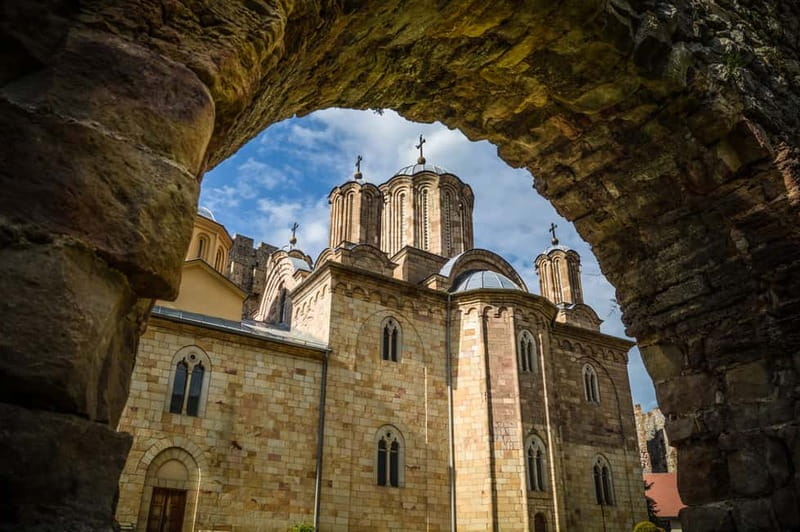
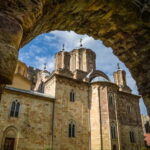
Then you go to Decan Monastery, known for its white church style and for being inhabited by Orthodox monks who make fresh organic food, including cheeses. The UNESCO angle ties to the frescoes and their depiction of 14th-century life and the Palaeologan renaissance change in Byzantine painting. Even if you only take in a few images up close, the guided framing helps you see what you are looking at.
Finally, you head to Rahovec, a viticulture area often described as a capital of wine production. The tour notes grapes grown since Illyrian times and vineyards on soft hillocks at elevations that help produce fine wines. There’s a wine festival in September, so if you are flexible, timing can add extra local energy.
Kruje Old Bazaar and Castle Escape Paths in the Mountains
Your final big stop in Albania is Kruje, a symbol of Albanian resistance against Ottoman expansion in the 15th century. It sits on rocky mountainous terrain about 560 meters above sea level, which is why the views and the feel of the town are so different from coastal places.
You explore the Medieval Old Bazaar, known as one of the biggest and oldest in the Balkans. This is also your main shopping opportunity for Albania. The stalls are the typical souvenir mix, but you can also find handmade items like carpets and jewelry.
Then you visit Kruja Castle. The tour specifically mentions hidden paths used by locals to leave the castle unnoticed during siege periods. It’s the kind of detail that turns a fortress from just “old stone” into a story about how people survived.
After the included castle visit, you have free time for lunch and more browsing. This is smart pacing because it gives you a buffer before Tirana, where the rest of the trip is food-focused again.
Tirana’s Food Walk, Coffee Culture, and Bunk’Art 2
Tirana is where the tour finishes with an everyday local rhythm.
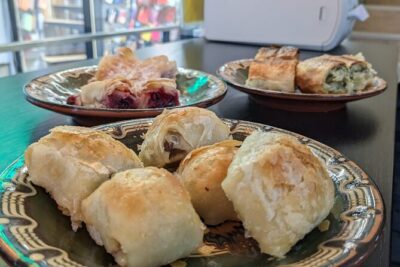
You meet with a local companion and get a quick city intro. Then the day turns into a food and market crawl. You stop at a local place to try byrek as a breakfast-style start. You’ll also visit Çam bazaar, founded by the Çam community, originally from Çameria in today’s North-West Greece. It’s a place you can browse and bargain, from clothing to kitchen goods.
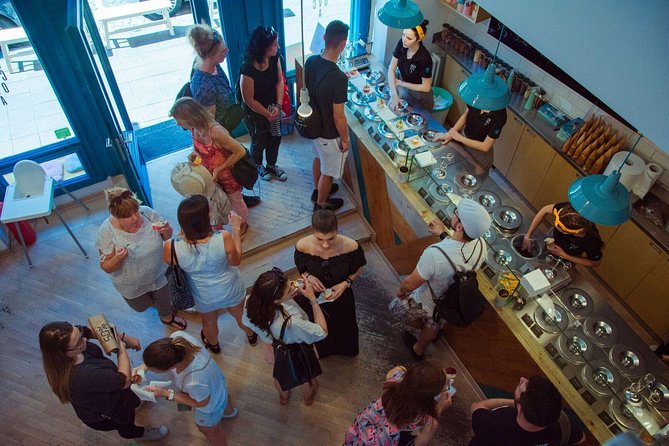
Back in Tirana, you join your local companion for a guided walk in neighborhoods picked to focus on food highlights, rather than tourist traps. You’ll try traditional dessert at a pastry, see busy street markets, and then sit down for Albanian coffee at a cozy café. After that, the tour continues through colorful neighborhoods and day-to-day street life.
The market segment keeps getting practical. You visit Pazari i Ri, including the so-called Bicycle bazaar with second-hand clothes and second-hand furniture. Then the New Bazaar segment ends with an included lunch: Qofte with bread, or for vegetarians bread with Albanian Gjize. You also taste Albanian raki.
To close the loop on history, the final stop is BUNK’ART 2, a museum inside a former nuclear bunker designed for Enver Hoxha and close party members. It was hidden from the public until 2014, then turned into a museum with a video exhibition about the communist army and daily life under the regime.
Pace, Driving Time, and What to Pack So You Enjoy It
This tour is built for people who like motion. You should expect long van days. One review-style detail you should take seriously is that there can be a lot of driving in the early part of the trip and on other days, especially if traffic builds.
Plan around that in a simple way:
- Wear walking shoes, especially because Sarajevo includes uneven terrain.
- Bring water and snacks for van time, since lunch is not included and you’ll often have free-time blocks.
- Expect frequent photo stops and short guided walks, not hours of pure lounging.
- If you care about museums, you’ll want a small “energy reserve” for the last day, since BUNK’ART 2 is a heavier topic.
Also, because this is a small group, your flexibility helps. If you are on time for the meeting points and ready when the guide calls, the whole day runs smoother for everyone.
Who This Tour Fits Best (and Who Might Want a Slower Option)
This is a great fit if you:
- Want to see five Balkan countries in eight days without doing all the planning yourself.
- Like guided context, especially for Sarajevo’s WWII and WWI connections and the more recent wartime scars.
- Enjoy food-focused moments, not only monuments. The farm visit and Tirana food walk are real highlights.
You might rethink it if you:
- Hate long driving days or want lots of downtime.
- Have mobility limits that would make uneven walking difficult.
- Want every meal included, since lunch and drinks are on you.
This tour is not “sit back, watch from the window” travel. It’s “ride, walk, learn, eat, repeat,” in a manageable small-group format.
Should You Book This Belgrade to Tirana Tour?
If you want a Balkan sampler that still feels guided and meaningful, I’d say this one is worth serious consideration. The value comes from the combination: small-group logistics, selected included admissions, breakfasts and transport taken care of, plus memorable experiences that are not just sightseeing checkboxes.
The big proof points are the stops that change the feel of the trip: Mrizi i Zanave for slow-food farm time, Kotor for UNESCO old town streets, Mostar for the old-city vibe, and Tirana for byrek, coffee, markets, and BUNK’ART 2 to end with historical weight.
One final note: because it is non-refundable, you want to be confident in your dates. If that sounds like you, book with the right mindset: bring energy, wear good shoes, budget for lunch, and enjoy the ride.
FAQ
How many people are in the group?
The tour is a small group with a maximum of 10 travelers.
What time does the tour start, and where do I meet the guide?
The start is in Belgrade at 8:00 am. The guide offers hotel pickup in Belgrade.
Where does the tour end?
The tour ends with hotel drop-off in Tirana.
What’s included in the price?
Accommodation and breakfast (BB) for all overnights, a professional tour guide, transport provided by the company, entry tickets for the sites that are visited, tourist and road taxes, petrol, and breakfast on 7 mornings.
What is not included?
Lunch, drinks, and snacks are not included, along with souvenirs and personal spending. Tips are recommended as an international practice for good service.
Is single room occupancy available?
Yes. Single rooms are possible with a 30 Euros extra charge per night per person.
Are any key attractions included with admission tickets?
Yes. Admission tickets are included for the sites that list them in the tour program, including Sinan Pasha Mosque, Kalaja Fortress, Kruja Castle, and BUNKART 2.
What is the cancellation policy?
The experience is non-refundable and cannot be changed for any reason. If you cancel or ask for an amendment, the amount you paid is not refunded.
Latest write-ups around Belgrade
- Belgrade Private Layover Tour With Return Airport Transfers★ 5.0 · 6 reviews
- Private Night Tour in Novi Sad in Style★ 5.0 · 6 reviews
- Belgrade Private City Tour – Metropolis Between East and West★ 5.0 · 6 reviews
- 3 Hour Private Walking Tour in Novi Sad City★ 5.0 · 6 reviews
- Belgrade Party Pub Crawl★ 5.0 · 6 reviews
- Belgrade Layover Private tour + E-Scooter Sighteeing★ 5.0 · 6 reviews
- Belgrade Highlights and Avala Mountain Tour★ 5.0 · 6 reviews
- Belgrade Insight Private Tour – For Those Who Seek Answers★ 5.0 · 6 reviews
Tours, side by side.

Sremski Karlovci and Novi Sad Full-Day Tour from Belgrade
Read our review →
Western Serbia 1-Day Tour of the Key Sites from Belgrade
Read our review →
Day Tour to Nis, Serbia with tickets and pick-up
Read our review →
Belgrade Big Tour: Top Attractions and Belgrade Neighborhoods
Read our review →The lists this tour appears in