
Reviewed · BELGRADE CITY WALKS
4-Hour Belgrade Private Grand City Walking Tour
This private Belgrade walking tour works because it links the city’s biggest landmarks into one easy, logical route. I like that you get a professional English-speaking guide who explains what you are seeing, not just where to stand for a photo, and the walk ends with the views and history of Kalemegdan.
Your main tradeoff is simple: it is a full walking experience and the tour does not include transportation. If you are not into lots of time on sidewalks and getting around on your feet, plan accordingly and wear comfortable shoes.
Key things I’d zero in on
- Private, English guide-led route: only your group, with real narration the whole way
- Saint Sava Church entry included: you can focus on the sights instead of ticket logistics
- Big-city Belgrade in one loop: squares, theatres, parks, palaces, and a fortress
- Belgrade’s stories in layers: Orthodox faith, WWII-era landmarks, and Yugoslav-era culture
- Kalemegdan Fortress open-air feel: a fort complex that spans centuries and lots of viewpoints
- Talk with your guide: guides like Nina are known for connecting Serbian and Yugoslav history to what you see today
Why a private walking tour is a smart way to understand Belgrade
Belgrade can feel like two cities at once. You have grand monuments and government buildings, then suddenly you are near cafés, theatres, and streets that feel younger and louder. A walking tour is one of the best ways to make sense of that mix, because you experience the transitions in real time.
On this tour, you start high on the Vračar plateau and gradually work your way toward the river-facing fortress. That makes the city’s geography easier to read. You do not just “collect stops,” you build a mental map as you go, especially with landmarks like Republic Square and Knez Mihailova on your route.
This is also a good choice if you care about context. A strong guide can turn architecture into story, and story into understanding. In past tours run by this operator, the guides are praised for thoughtful conversations about Serbian and Yugoslav history, and for discussing how those events connect to the Serbia you see now.
More Belgrade ideas on the table
- Belgrade: 3-Hour Small Group Walking Tour
★ 5.0 · 180 reviews - Half-Day Sightseeing and Walking Tour of Belgrade City
★ 5.0 · 37 reviews - Belgrade City Walk, Gathering and Sightseeing
★ 5.0 · 19 reviews
Saint Sava Temple on the Vračar plateau: mosaics, crypts, and Tesla
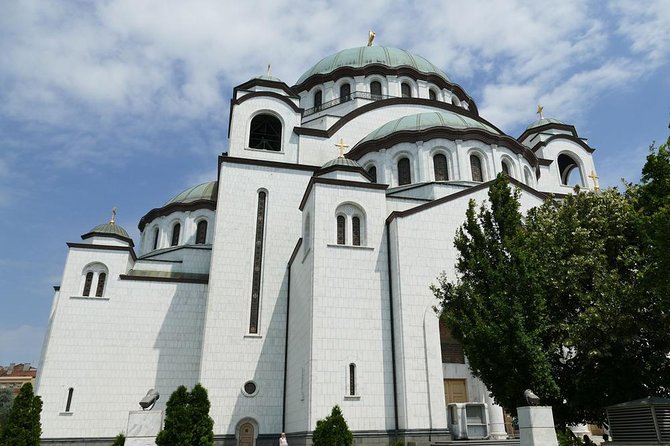
You meet at Saint Sava Church, Svetog Save 36, and you begin on the Vračar plateau, where Belgrade’s most famous religious landmark rises above everything else. Saint Sava Temple is the second largest Orthodox church in Europe, and your guide points out the details that make it feel both monumental and very specific. Expect to focus on the crypt and the main dome filled with mosaics.
This is also where the tour uses history in a practical way. You hear stories tied to Serbia’s early royal era and religious leadership, including Rastko Nemanjić, described here as the first Serbian Archbishop. That background matters, because otherwise the temple can feel like a beautiful building with no emotional anchor.
Then you shift from religious history to modern Belgrade symbolism. On the same plateau you will see the statue of Nikola Tesla and the National Library built during WWII. That juxtaposition is one of the tour’s best moves: the guide helps you notice how Belgrade marks different eras in the same skyline.
What I like for your visit:
- You get a guided look at crypt and mosaics, not just a quick exterior stop
- The Tesla and WWII library details help you read the plateau as a timeline
The consideration:
- You are starting with a major landmark, so if you like slower warmups, give yourself a few minutes to settle and start listening before you rush into photos
Slavija Square to Flower Square: the Phantom, theatre, and a rock-and-roll first
After the temple area, the route moves to Slavija Square, one of Belgrade’s large crossroads. It is named after one of the oldest hotels in Belgrade, built in 1888, and the square is also known for how many streets converge here. Your guide uses that geometry to explain how this part of town works.
Then comes one of the more “Belgrade” moments: the story of Belgrade Phantom. Whether you are into legends or not, this kind of tale gives the city personality. You start seeing how folklore, old lodging history, and street layouts can become part of Belgrade’s identity.
From Slavija Square you head toward King Milan Street and then to a smaller spot called Flower Square. This is the kind of pause that makes a walking tour better than a drive-by. Two cultural buildings frame the space, and you get the story behind them:
- The Yugoslav Drama Theatre, rebuilt in 2003
- The Students Cultural Centre, where the first rock and roll performance was held in Belgrade
That second detail is a reminder that the city’s culture is not only classical and religious. It is also music, youth movements, and shifts in how people gathered and reacted to the wider world.
What to watch for:
- The way the guide ties cultural venues to time periods, so the streets feel less random
- The smaller squares, because they are where you often get clearer sightlines for photos
Possible drawback:
- This part of the city is active, so expect normal city noise and foot traffic while you pause and listen
Tasmajdan Park, St Mark Church, and the palaces corridor
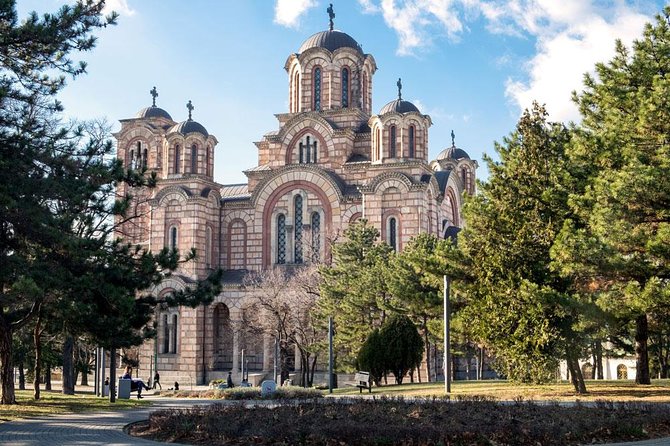
Next you reach St Mark Church, Crkva Svetog Marka, reached via Resavska Street and set in Tasmajdan Park. This park is described as the second largest in Belgrade, and that matters because it is not just a scenic break. It gives you a “lung” after busy streets and helps your brain reset between political buildings and major landmarks.
St Mark Church also gives the tour a second major church perspective, so you can compare how different Belgrade Orthodox architecture feels. Your guide keeps things anchored in what you can see, and the park setting makes the church feel more human-scaled than Saint Sava’s sweeping, sky-dominating presence.
From there you walk toward the main city center and pass by governmental landmarks, including the Serbian National Parliament, plus the Old and New Palace. Even if you never go inside, it is useful to see how the city expresses power and administration through prominent buildings.
As you continue, the route crosses smaller squares named Nikola Pasić Square and Terazije Square. Terazije is especially fun for visual contrast, and you also pass Hotel Moscow on this stretch.
Why this sequence is valuable:
- You move from church to park to government buildings without losing the plot
- You learn to recognize Belgrade’s “center lines,” the streets that connect civic power with everyday life
One consideration:
- This section is largely exterior viewing, so if you are hoping for lots of indoor stops beyond Saint Sava, you will need to be okay with exterior context
Leave Belgrade for a day, differently:
- From Belgrade: Novi Sad & Sremski Karlovci Full-Day Tour
★ 4.7 · 1,068 reviews - From Belgrade: Gems of Eastern Serbia Tour
★ 5.0 · 427 reviews - Northern Serbia: Sremski Karlovci and Novi Sad Full-Day Tour from Belgrade
★ 5.0 · 425 reviews - Day Trip from Belgrade: Gems of Eastern Serbia
★ 5.0 · 424 reviews
Republic Square and Prince Mihail Obrenović: the city’s main meeting point
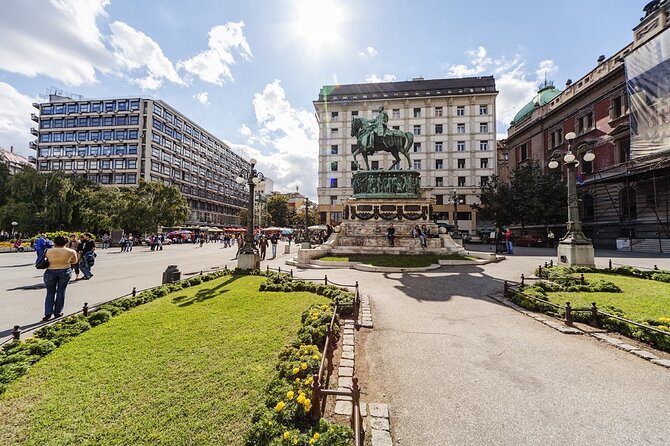
Trg Republike is the heart of the center, and it functions as the main meeting point in the city. Here you see major civic and cultural institutions: the National Theatre and the National Museum. There is also a monument dedicated to Prince Mihail Obrenović.
This is one of those places where the tour becomes instantly practical for you as a traveler. Once you understand Republic Square, you can orient yourself across the rest of central Belgrade. It becomes a mental anchor for your remaining time, whether you head to cafés, museums, or simply want a clear reference point.
Your guided moment here is short, but it is enough to register the key buildings and monument and understand why they matter in the larger story.
The main tip:
- Use the time for a quick photo and then stand for a minute to let the square layout click. It helps your understanding more than another rushed picture
Knez Mihailova street to Kalemegdan: from shopping lane energy to fortress views
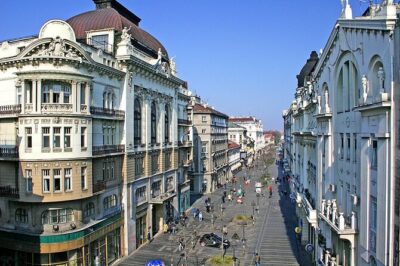
Now you shift from major squares and landmark buildings to Knez Mihailova street, Belgrade’s main walking and shopping zone. It is described as crowded and lively, and that energy is part of the point. This is what makes the route feel like real city life, not a museum corridor.
As you walk along Knez Mihailova, the city’s tempo changes again. You are surrounded by storefronts and pedestrian movement, but you are also working toward the next big visual payoff, Kalemegdan and the Belgrade Fortress.
For many visitors, this is when the trip starts to feel like it belongs to them, not just to a tour script. You notice who local people are and how they move. You also get a natural sense of direction, because the fortress area becomes a growing visual target as you approach.
If you want a smooth experience:
- Take your time on this stretch. It is easy to speed up while you think you still have “more time ahead”
Kalemegdan Park and Belgrade Fortress: centuries in one outdoor complex
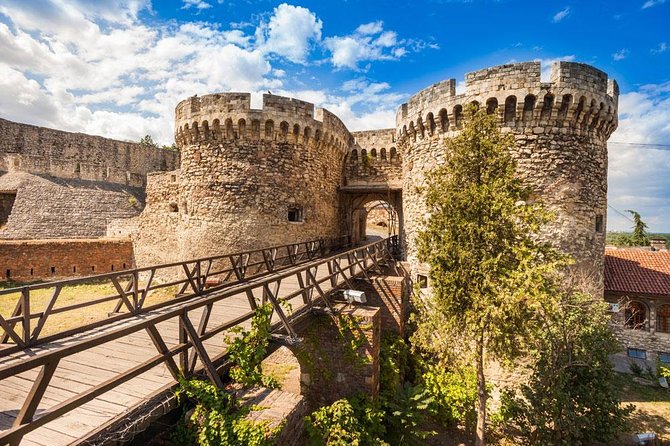
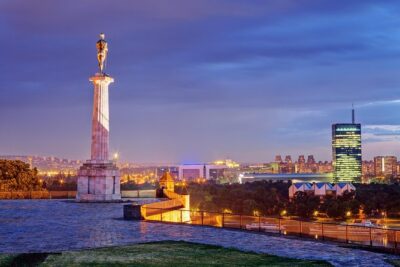
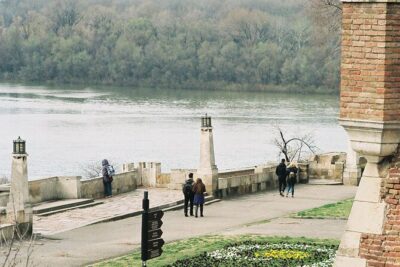
The final stop is Kalemegdan Fortress, the dominant attraction in the area. It is described as an open-air museum built between the 1st and 18th centuries, and it has been besieged more than 100 times. That is a lot of conflict and survival packed into one place.
The fortress complex is divided into Upper and Lower Town. Your guide helps you focus on key highlights, including:
- Roman Well
- Nebojsa Tower
- Military Museum
- Victor Monument, the main symbol of Belgrade
This is where your earlier orientation pays off. After seeing churches, theatres, government buildings, and central squares, the fortress gives you the long-term defensive logic behind the city. It also gives you physical scale. You can understand why this location matters when you are standing where people once watched, waited, and controlled approaches.
Why I think 1 hour here is the right amount:
- Enough time to see the main pieces and get your bearings
- Not so long that you feel like you need to “complete” the site to justify the effort
Practical consideration:
- Wear shoes with grip. Even if the paths are manageable, fortress grounds tend to be uneven in places, and you will likely be walking longer than you expect after all the city stops
Price, timing, and whether the value fits your trip
The tour price is $102.13 per person, for about 3 to 4 hours. It is private, so it is priced as a small-group or custom-experience format rather than a bargain group shuffle.
Here is the value math you should consider. This price includes a professional English-speaking guide, plus an entry ticket to Saint Sava Church. That combination matters. Without a guide, you would need to spend time figuring out how the pieces connect, and you would still have the ticket logistics for one of the most important stops.
Also, the route is built for efficiency. Starting at 10:00 am and ending at Kalemegdan keeps the day focused. If you are short on time in Belgrade, 3 to 4 hours on foot can be the best use of half a day.
A small heads-up: hotel pickup and drop-off are not included, so you will need to handle your own getting to Svetog Save 36 at the start and moving to the end point at Stanica KalemegdanPariska. If you like independence but want expert guidance for the landmarks, this setup usually feels fair.
One more reason to book earlier if you can: this experience is often reserved around 40 days in advance. Demand tells you something here. People want the English-led, private version, not just the “walk and hope” option.
The biggest difference a great guide makes in Belgrade
Belgrade is full of layers, and the best guides help you notice them without turning the day into a lecture. Nina is specifically mentioned as excellent for Serbian history and also greater Yugoslav history, with lively discussions that link past events to today’s Serbia. That style is exactly what you want on a walking tour, because it turns streets into explanations.
If you like asking questions, this format tends to work well. Instead of one-way talking, you get a more conversational flow. You also get more out of details like WWII-era building choices, the role of religious leaders in early narratives, and why theatres and youth culture appear in the same day’s route as major civic sites.
And if you run into pre-tour questions, the office support has been credited too, with Jelena mentioned as part of the helpful coordination.
Should you book this private Belgrade grand city walking tour?
Yes, if you want Belgrade at a human pace with a guide who connects the sights to the stories behind them. The route is strong: Saint Sava Temple, St Mark Church and Tasmajdan Park, Republic Square, Knez Mihailova, then Kalemegdan Fortress. That is a lot of Belgrade’s “why” in one half-day.
Book it especially if:
- You are traveling in English and want clear explanations, not guesswork
- You care about history that includes both Serbian and Yugoslav threads
- You want a private format, so you can keep the pace comfortable for your group
Consider skipping or adjusting if:
- You dislike walking for several hours with no transport included
- You are looking for lots of extra indoor admissions beyond Saint Sava, since the only specified entry is Saint Sava Church
FAQ
How long is the 4-Hour Belgrade Private Grand City Walking Tour?
The tour lasts about 3 to 4 hours.
What time does the tour start, and where do I meet?
The start time is 10:00 am. You meet in front of the main entrance to Saint Sava Church at Svetog Save 36, Beograd 11000, Serbia.
Where does the tour end?
The tour ends at Stanica KalemegdanPariska, Beograd, Serbia.
Is this tour private?
Yes, it is a private tour/activity, and only your group will participate.
What is included in the price?
The price includes a professional English-speaking guide and an entry ticket to Saint Sava Church.
What is not included?
Hotel pickup and drop-off, transportation to/from attractions, and personal expenses are not included.
Are service animals allowed, and is it suitable for most people?
Service animals are allowed. Most travelers can participate, and comfortable shoes are more than recommended because it is a complete walking tour.
What is the cancellation policy?
You can cancel for free up to 24 hours in advance for a full refund. If you cancel less than 24 hours before the experience’s start time, the amount you paid will not be refunded.
Latest write-ups around Belgrade
- Private Wine Tasting by Party in Belgrade★ 5.0 · 3 reviews
- Private Half Day Serbia Tour Novi Sad and Petrovaradin Fortress★ 5.0 · 3 reviews
- Belgrade: The White Emigration in Serbia in the Wake of the Russian Revolution★ 5.0 · 3 reviews
- From Belgrade: Private Nis and Devil’s Town Full-Day Tour★ 4.0 · 4 reviews
- Private Walking Tour of Belgrade and Old Zemun★ 5.0 · 3 reviews
- Belgrade center walking tour with Rakija, Cocktails and Burgers★ 5.0 · 4 reviews
- From Belgrade:Uvac Nature Reserve Tour★ 5.0 · 4 reviews
- Novi Sad Saturday Full day trip★ 4.0 · 4 reviews
Belgrade City Walks, side by side.
Walking Tour city center and Petrovaradin Fortress
Read our review →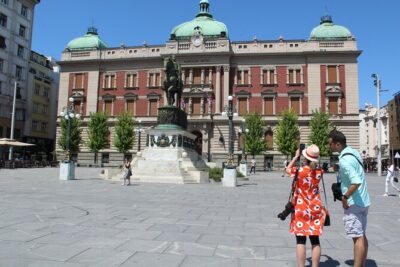
Half-Day Sightseeing and Walking Tour of Belgrade City
Read our review →
The lists this tour appears in