
Reviewed · BELGRADE CITY WALKS
Belgrade City Walk, Gathering and Sightseeing
Belgrade City Walk, Gathering and Sightseeing is a smart way to get your bearings fast, because the route stitches together royal Serbia, parliamentary Yugoslavia, and today’s city life in one walkable loop. You start downtown, then work your way toward the Sava and Danube view points, where history gets physical.
I especially like the focus on real places with real names, from Crkva Svetog Marka to Hotel Moskva. And I like that you get a complimentary hot drink, which turns the tour into something more than just passing monuments.
One thing to consider: the guide spends time on the country’s identity and politics, not only buildings. If you want strictly architectural facts, you may find some stops feel more about the bigger story than details you can photograph.
Quick Hits You Should Care About
- Short, efficient stops (most around 10 to 20 minutes) keep you moving without rushing.
- A small group capped at 6 means you can actually ask questions.
- One admission ticket is included at Crkva Svetog Marka, plus several locations are free.
- Hotel Moskva coffee is a standout moment, and it fits naturally into the route.
- Central Belgrade orientation lets you revisit key spots later on your own.
Getting Your Bearings: Central Belgrade in 2 to 3 Hours
This walk is designed for first-timers who want context, not just photos. You start at Kosovska 47, and you end at Kneza Mihaila 54a, right by the Belgrade City Library. That ending spot is useful, because it drops you back in the core where it’s easy to keep exploring after the tour.
The route is mostly in the central area, so the pacing feels practical. Stop times are short enough that you can absorb the essentials without getting museum-fatigue. And because it’s in English, you can follow the story without having to translate everything in your head.
The tour is also built to help you later. By the end, you should recognize the names and layout of the main sights, so your self-guided wandering makes more sense. Belgrade can feel layered and complicated, but walking it with a storyline helps you connect the dots quickly.
More Belgrade ideas on the table
- Belgrade: 3-Hour Small Group Walking Tour
★ 5.0 · 180 reviews - Half-Day Sightseeing and Walking Tour of Belgrade City
★ 5.0 · 37 reviews - Belgrade Private Walking Tour with a Local
★ 5.0 · 19 reviews
Price and Value: What $38.41 Covers
At $38.41 per person for about 2 to 3 hours, you’re paying for three things: a guided explanation, a hot drink, and at least one attraction entry.
Here’s what’s explicitly included:
- A complimentary coffee and/or tea (and yes, this matters in Serbia where coffee is a ritual, not just caffeine).
- Admission ticket included at Crkva Svetog Marka.
Some other stops are marked as free, while others do not include tickets. So your value depends on which parts you would naturally want to go inside versus just see from outside. But even if you only take in the sights externally, you’re still getting the advantage of local framing and a route that hits the main anchors in central Belgrade.
Your Guide (Aleksandar Bastic) and the Tour Style
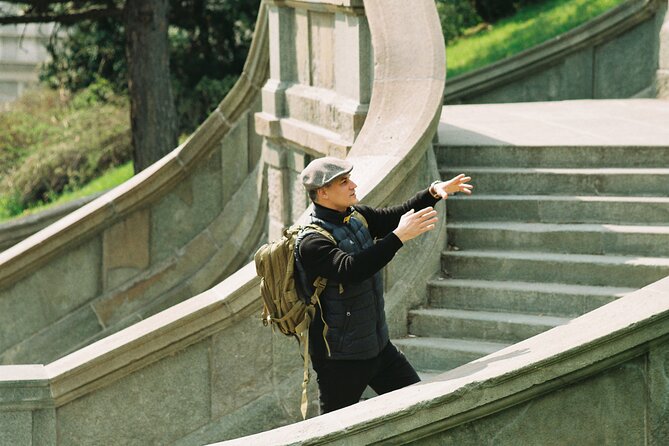
The experience is led by Aleksandar Bastic, and the big theme from the feedback is consistency: clear explanations, enthusiasm, and objectivity. He tends to connect history to how people think and live, so you don’t just memorize dates. You also get chances to steer questions toward what you actually care about.
A small group size of up to 6 travelers is a genuine quality-of-life upgrade. You’re not stuck listening through shoulders and backpacks. It also makes the pace more conversational, so the tour doesn’t feel like a scripted lecture that never adjusts.
Do keep expectations aligned. This is not only about architecture. You’ll hear about identity, religion, customs, and Serbian mentality. If you come with a very narrow goal, you might need to bring it up early so the guide can focus the conversation.
Stop 1: Crkva Svetog Marka and the Obrenović Graves

Crkva Svetog Marka is where the tour starts with names that carry weight in Serbian history. You’re shown the burial site of Milan Obrenović, the eldest son of Miloš Obrenović. You also learn about the couple: King Alexander I Obrenović and his wife, Queen Draga.
The place itself is part of the story. The church stands on ground where, in 1830, a sultan’s edict was read announcing Serbian autonomy within Turkey. That detail matters because it turns a church visit into a conversation about shifting power and political change.
Expect about 20 minutes here, and the admission ticket is included. That’s a strong start, because you’re not paying extra just to get into the main historical moment. If you like your context anchored in specific people and events, this is one of the stops that will stick.
Possible drawback: for some visitors, a church visit can feel more reflective than “sightseeing.” If you prefer action-packed visuals only, you’ll still get the history, but the tone may be quieter.
Leave Belgrade for a day, differently:
- From Belgrade: Novi Sad & Sremski Karlovci Full-Day Tour
★ 4.7 · 1,068 reviews - From Belgrade: Gems of Eastern Serbia Tour
★ 5.0 · 427 reviews - Northern Serbia: Sremski Karlovci and Novi Sad Full-Day Tour from Belgrade
★ 5.0 · 425 reviews - Day Trip from Belgrade: Gems of Eastern Serbia
★ 5.0 · 424 reviews
Stop 2: House of the National Assembly (1907 to 1936) as a State Symbol
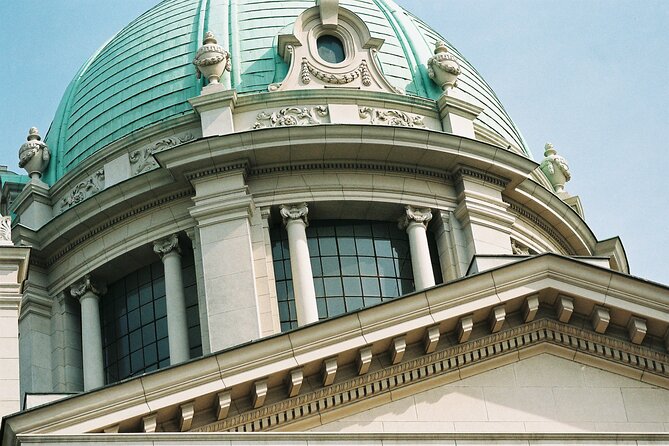
Next comes the House of the National Assembly of the Republic of Serbia. Even if you don’t go inside, the exterior is worth your attention, because the building is described as monumental and tied directly to the parliamentary life of the state.
The construction story is part of why this stop has meaning. Work took place from 1907 to 1936, but it wasn’t smooth. There were interruptions and project changes, and the plan involved major architects from the early 20th century, including Konstantin A. Jovanović and Jovan Ilkic.
This stop is a good reminder that political institutions do not appear fully formed. They grow through funding, politics, and compromise. I like that the guide can turn the building into a lesson about how countries build their own legitimacy over time.
Admission is not included here. If you want interior access, you may need to pay separately or choose another plan. Still, the time you get outside is useful for placing the building in the “how Serbia and Yugoslavia governed themselves” story arc.
Stop 3: The Old Palace, Academism, and the City Assembly
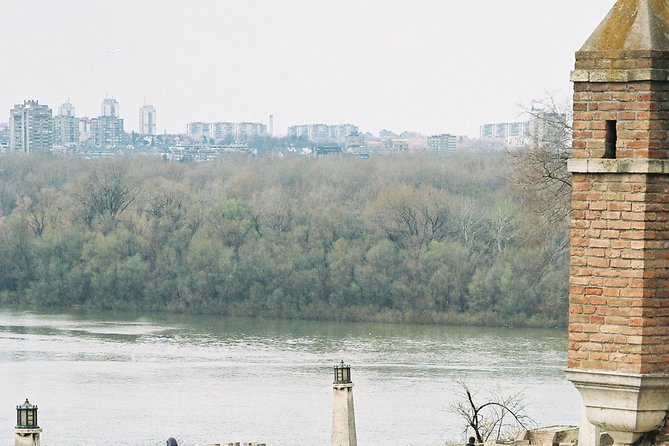
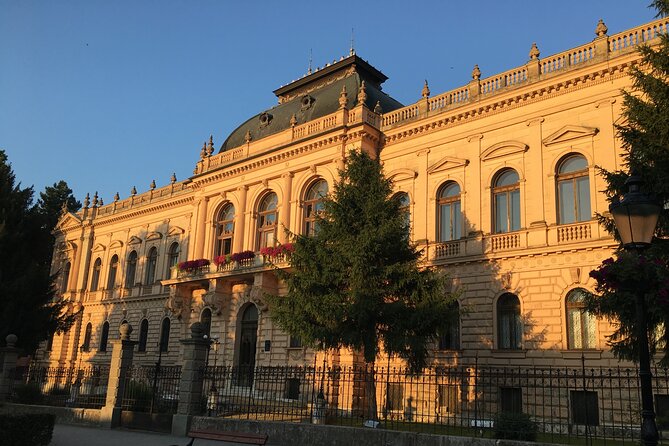
You then move to the Old Palace, also known as the Royal Palace of the Obrenović dynasty of Serbia. Today it houses the City Assembly of Belgrade, so it’s not just a historical shell. It’s still in use.
The building dates to 1882 to 1884, designed by Aleksandar Bugarski. Outside, you can spot why it’s described as one of Serbia’s notable achievements of academism from the 19th century. In plain terms, it’s a statement building, built to look official and permanent.
This stop is around 15 minutes, and it’s marked as free. That’s handy, because you’re getting the architectural and historical framing without adding extra ticket costs. It’s also a great moment to take photos, since you’re in a civic setting where the building looks impressive from the street.
If you’re the kind of person who enjoys noticing styles, you’ll probably enjoy this one more than a quick glance. If you’re not into architecture, let the guide explain why academism mattered to the country’s image at the time.
Stop 4: Hotel Moskva, Terazije Square, and a Coffee Ritual
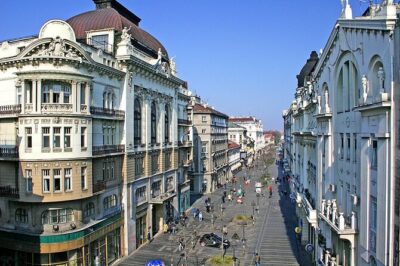
Hotel Moskva is a highlight for a reason: it’s a recognizable landmark with serious history and a very Belgrade kind of atmosphere. It sits on Terazije Square and opened in 1908, built in a Russian secession style.
It’s protected as a cultural monument and has a famous café, restaurant, and spa. The tour’s information notes it has hosted major celebrities, including Albert Einstein and Robert De Niro. Whether those stories are your main interest or not, the point is that the hotel has long been part of Belgrade’s public life.
Expect about 15 minutes here. And this is where the tour’s complimentary hot drink really feels at home. Many people love the moment because it pauses the walking and gives you a chance to absorb what you just learned. Coffee in Serbia is a ritual, so it’s not a random perk.
What to watch for: if you dislike sitting with your thoughts and want nonstop movement, you might treat this as your “reset” stop and then pick up the pace again. The tour structure still keeps you on schedule.
Republic Square (Trg Republike): The City’s Main Meeting Point
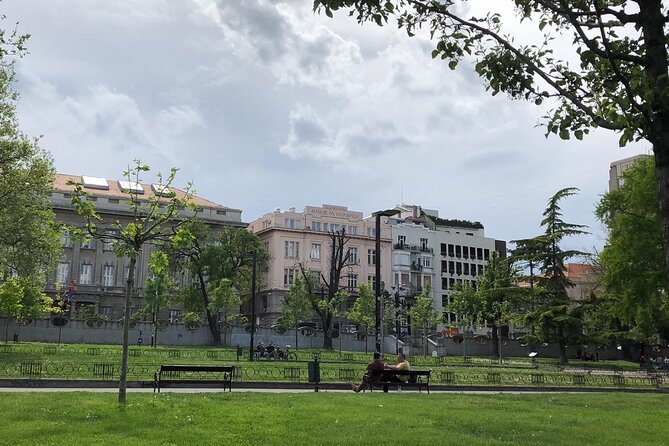
Republic Square is a central place for Belgradians to meet, and the tour frames it in a useful way: it sits on the location where the gates leading into the city used to be.
So even though it’s a modern gathering spot, it has an older function embedded in the ground. This kind of information helps you see the city as a continuous story, not separate eras stacked like postcards.
You’ll spend about 15 minutes here, with no admission ticket required. That makes it a good “breather stop” between the more structured sites. It also gives you a sense of scale, because the square helps you understand how Belgrade organizes its downtown life.
If you want a practical tip, this is a great place to mentally list what you might revisit after the tour. The square is easy to find again later, and it helps orient you for the walk toward Kalemegdan.
Nebojša Tower (Nebojsa Tower): Customs and Celebrations You Can Only Find in Serbia
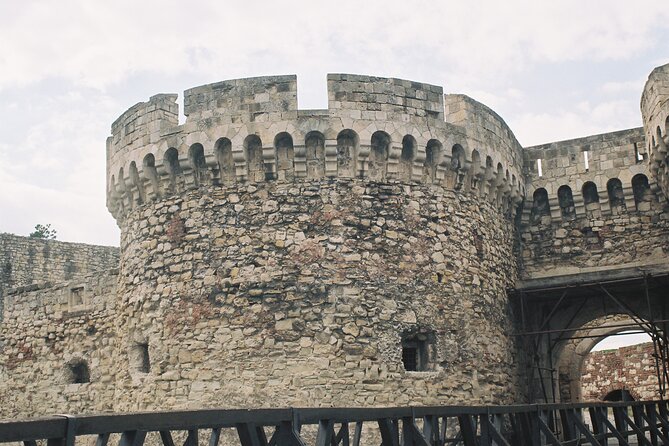
Next is Nebojsa Tower, with a focus less on a single object and more on what the guide calls special customs and celebrations only celebrated in Serbia. This is one of the more “storytelling” stops, and it works best if you like cultural context, not just monuments.
The tour time here is around 25 minutes, and admission is free according to the plan. That means you can relax and let the guide explain without feeling like you’re rushing through a ticketed attraction.
In my view, this type of stop is valuable because it connects history to everyday life. You start to understand why certain symbols and traditions make sense in Serbian culture. If you only chase architecture, you might miss that connection, so this stop is worth paying attention to even if you don’t know what to expect at first.
Monument of Gratitude to France: Ivan Meštrović in 1930
The Monument of Gratitude to France sits at the end of the main alley of Kalemegdan Park, erected in 1930. It’s the work of sculptor Ivan Meštrović.
This stop is short, about 10 minutes, and no admission ticket is included. Still, it’s meaningful because it shows how Belgrade has publicly marked international relationships. The name alone hints at a gratitude message, and the sculptor connection gives you something tangible to anchor in.
If you like art as a historical language, you’ll probably enjoy how the guide connects this monument to the wider world events of its time. Even if you don’t, it’s a good waypoint before the bigger fortress moment.
Kalemegdan Park and Belgrade Fortress: The Sava and Danube Confluence View
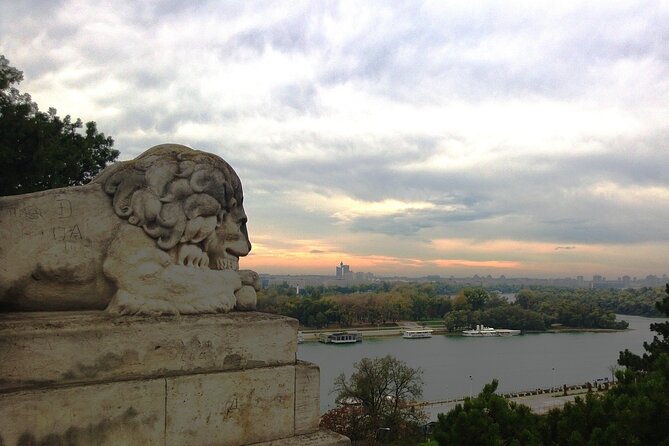
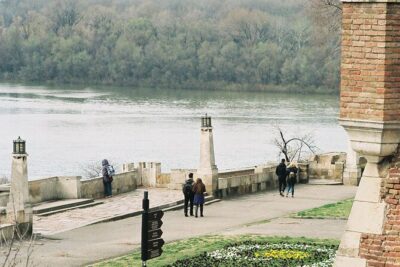
Now for the big open-air payoff: Kalemegdan Park and the Belgrade Fortress. The fortress area includes the old citadel and Kalemegdan Park, located where the Sava and Danube rivers meet in the modern city.
You’ll get about 45 minutes, and it’s marked free. That’s a generous chunk of time in a place that can easily turn into a long wandering session on your own. Here, the tour keeps it structured enough that you still finish the walk feeling satisfied.
This is where Belgrade’s geography becomes part of the story. A fortress isn’t just a building, it’s a reason to build there, defend there, and control river movement. The tour frames this historical core as being in the municipality of Stari Grad, which helps you understand where the city’s “old center” lives today.
Practical note: bring a layer. Rivers and parks can shift the air quickly, and you’ll likely be outside for a good stretch.
Pobednik (Victor Monument): Sword, Falcon, and Balkan-Wars Symbolism
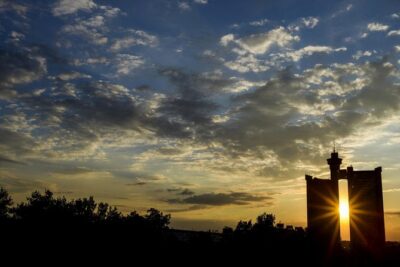
You close the walk with Pobednik, the Victor monument. It’s one of Belgrade’s most recognizable symbols, and it’s tied to the victory of the Serbian army in the Balkan wars.
The guide explains why the monument is so famous: it was created over a long period. It was originally conceived as a fountain that was meant for the center of Belgrade on Terazije, and the sculptor Ivan Mestrovic was tasked with the work.
The monument’s central figure is described in a vivid way. By the start of World War I, the central part of the fountain was cast with a naked male figure holding a sword in the right hand and a falcon in the left, symbolizing war and peace.
This stop is about 15 minutes and free to enjoy. It’s a strong ending because it gives you a symbol you can carry in your head as you leave. You can look back and realize how often Belgrade uses public art to say what words were too risky to say at other times.
Who This Tour Suits Best (And Who Might Want Something Different)
This Belgrade city walk is ideal if you want an organized route that covers a lot of ground in a short time. It’s especially good for:
- First-time visitors who want a clear mental map.
- People who like history connected to places, not just dates.
- Anyone who enjoys coffee culture and doesn’t mind a short seated pause.
It may be less ideal if you want strictly factual sightseeing with minimal commentary on Serbian politics and identity. The tour’s structure includes those themes, so you should choose this only if that adds to your experience rather than irritates you.
Group size stays small, pace stays comfortable, and the guide is attentive to interests. That combination makes it feel personal without being awkward.
Should You Book This Belgrade City Walk?
I’d book it if your goal is to learn Belgrade in one sitting, and then roam the city with more confidence. For the price, you get a guided storyline, a complimentary coffee or tea, and an included admission ticket at Crkva Svetog Marka. That’s good value for a short 2 to 3 hour format.
I’d skip it or choose a different style of tour if you want a purely architectural walk with no cultural or political context. This one treats those topics as part of the explanation.
If you book, come with a flexible mindset. Ask questions early, especially if you care more about art, religion, or politics. With Aleksandar Bastic leading, you’re set up for a thoughtful walk that ends with Kalemegdan views and a memorable symbol in Pobednik.
FAQ
How long is the Belgrade City Walk tour?
It runs about 2 to 3 hours.
What does the tour cost?
The price is $38.41 per person.
Is the tour offered in English?
Yes, it is offered in English.
Where do I meet and where does the tour end?
You meet at Kosovska 47, Beograd 11000, Serbia. The tour ends in front of the Belgrade City Library at Kneza Mihaila 54a, 56 Knez Mihailova street.
What is included in the tour price?
Coffee and/or tea are included, and there is a mobile ticket.
Are admission tickets included for every stop?
No. The admission ticket is included at Crkva Svetog Marka. The House of the National Assembly ticket is not included. Other locations are listed as free, including the Old Palace (Belgrade City Assembly), Nebojsa Tower, and Kalemegdan Park and Belgrade Fortress.
Is transportation included?
No, transportation is not included.
How large is the group?
The maximum group size is 6 travelers.
What is the cancellation policy?
Free cancellation is available up to 24 hours in advance for a full refund.
If you want, tell me your travel dates and what you’re most interested in (churches, monuments, or fortress views), and I’ll help you plan the best order for the rest of your Belgrade day.
Latest write-ups around Belgrade
- Private Wine Tasting by Party in Belgrade★ 5.0 · 3 reviews
- Private Half Day Serbia Tour Novi Sad and Petrovaradin Fortress★ 5.0 · 3 reviews
- Private Walking Tour of Belgrade and Old Zemun★ 5.0 · 3 reviews
- Belgrade: The White Emigration in Serbia in the Wake of the Russian Revolution★ 5.0 · 3 reviews
- From Belgrade: Private Nis and Devil’s Town Full-Day Tour★ 4.0 · 4 reviews
- From Belgrade:Uvac Nature Reserve Tour★ 5.0 · 4 reviews
- Belgrade center walking tour with Rakija, Cocktails and Burgers★ 5.0 · 4 reviews
- Novi Sad Saturday Full day trip★ 4.0 · 4 reviews
Belgrade City Walks, side by side.
Walking Tour city center and Petrovaradin Fortress
Read our review →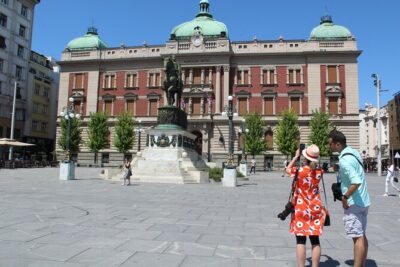
Half-Day Sightseeing and Walking Tour of Belgrade City
Read our review →
The lists this tour appears in