
Reviewed · HISTORICAL TOURS
Tito and History Vintage Car Tour
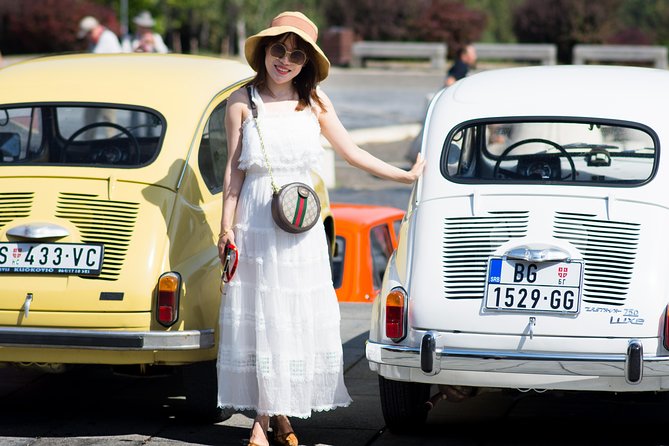
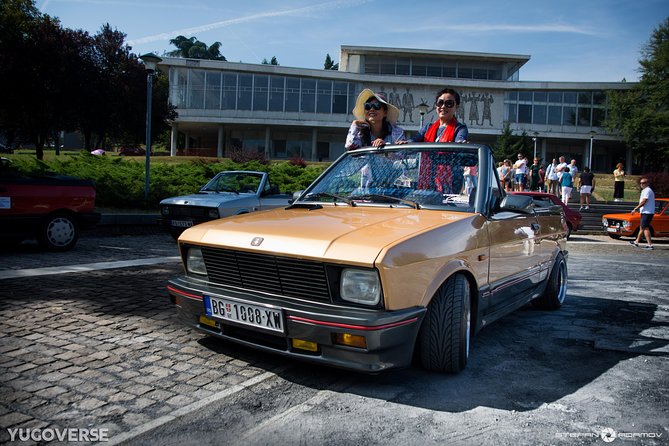
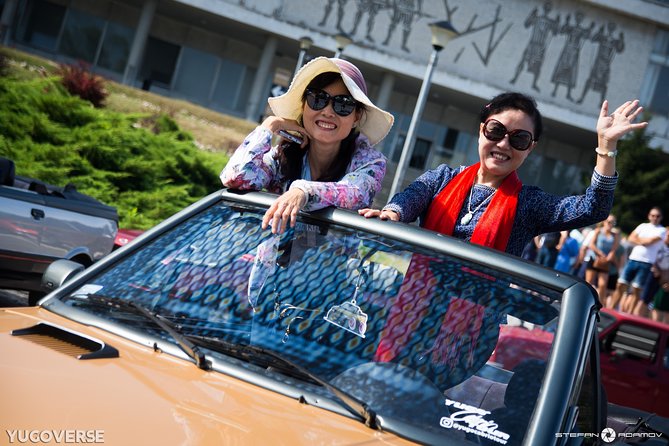
Vintage Yugoslav cars plus Belgrade’s big postwar landmarks is a fun combo, especially if you like stories that mix engineering, politics, and street-level context. I like the way the tour brings the Yugo conversation to life with real car talk, including the Yugo convertible, not just textbook history. One possible drawback: this is a compact outing, so you will move fairly quickly between several iconic stops.
My other favorite part is the guide, Jovana, whose enthusiasm clearly drives the tour. I also love that you get built-in breaks like snacks and soda while you’re out seeing places such as the Western City Gate and Tito-related sites. If you’re hoping for lots of time inside buildings beyond the museum, plan around the fact that some interiors are only shown via photos rather than walk-ins.
Key Highlights You Should Know Before You Go
- Yugo focus, including the convertible angle, with guide-led storytelling
- Tito-era context at the Museum of Yugoslavia, with time to actually look around
- Brutalist architecture stop at the Western City Gate (Genex Tower), designed in 1977
- No fee headaches on the spot, since the tour covers what you need
- Snacks and soda provided while you’re out touring
- Private format, so your group stays together with a single guide
What This Tour Feels Like in Real Life
This is a short, guided Belgrade “great hits” style tour, but with a twist. Instead of only pointing at landmarks, the vintage car theme gives you a different lens for understanding Yugoslavia and the era that shaped so much of the city. You’re not stuck in a museum lecture. You’re walking and looking, then hearing how the cars fit into the bigger story.
The pacing is practical. Expect about 2 to 3 hours of touring with stops close enough to keep things fluid. You’ll get help along the way, especially at the first part where you’re either meeting up near Dragoslava Jovanovića 14 or using a pickup option if you arranged it.
Because it’s private, it tends to work well when you have questions. Want more on why certain design choices mattered? Ask. Curious about what the city was trying to show through its architecture? Ask that too. A private guide can steer the conversation toward what you care about.
More Belgrade ideas on the table
- A Crash Course through Serbian History
★ 5.0 · 58 reviews - History and Culture in my Belgrade
★ 5.0 · 41 reviews - NATO Bombing of Belgrade Historical Tour
★ 5.0 · 17 reviews
Price and What You Actually Get for $144
At $144 for about 2 to 3 hours, the value mostly comes from three things: guided access, time saved, and included costs. The tour notes that all fees are handled, so you’re not scrambling to buy separate tickets on arrival. That matters when you’re in a tight schedule.
You also get snacks and soda while you’re out, which sounds small until you realize it can help you stay comfortable through multiple stops. And the itinerary blends outdoor sites with one major indoor museum stop where admission is included.
Is it expensive for Serbia? It’s not the cheapest thing in town. But it’s also not just a drive-by photo walk. You’re paying for a guide who connects the architecture and Tito-era storytelling to the vintage car theme, plus the convenience of private pacing.
If you want a flexible, low-effort way to see several top spots in one go, this price starts to make sense fast.
Starting in Belgrade: Pickup, Meeting Point, and Mobile Ticket
You have two ways to begin. You can request pickup, or you can head to the meeting point at Dragoslava Jovanovića 14, Beograd 11000, Serbia. The tour uses a mobile ticket, which is convenient because you don’t have to worry about printing.
The ending location is different from the start, so don’t plan a tight connection right at the finish. The opening window runs broadly each day, from 9:00 AM to 9:00 PM, which gives the guide flexibility to work around the day’s timing.
If you like to travel with minimal hassle, that “no paying on the spot” note is worth paying attention to. It helps keep your head clear while you’re focusing on the places themselves.
Stop 1: House of the National Assembly and the Obrenović Royal Story
The first stop is the House of the National Assembly of the Republic of Serbia, a site with royal roots. It used to be the royal residence of the Obrenović dynasty. Today it houses the City Assembly of Belgrade.
Even if you don’t study Serbian political history, you’ll likely enjoy this stop because it’s a clear example of how buildings get reused when regimes change. The tour keeps it short, around 15 minutes, and the admission ticket is free, which makes it an easy opener.
Practical tip: arrive with your camera ready, but don’t expect this to be a long interior-only visit. The value here is in understanding what you’re looking at from the outside and hearing the context.
Leave Belgrade for a day, differently:
- From Belgrade: Novi Sad & Sremski Karlovci Full-Day Tour
★ 4.7 · 1,068 reviews - From Belgrade: Gems of Eastern Serbia Tour
★ 5.0 · 427 reviews - Northern Serbia: Sremski Karlovci and Novi Sad Full-Day Tour from Belgrade
★ 5.0 · 425 reviews - Day Trip from Belgrade: Gems of Eastern Serbia
★ 5.0 · 424 reviews
Stop 2: Park of Friendship and the Belgrade Non-Aligned Moment
Next up is the Park of Friendship, or Park Prijateljstva. It’s described as one of the most nobly conceived, and also possibly the most incomplete, parks in Belgrade. That’s a key detail because it frames the park as a “living monument” to both hope and disappointment.
This stop ties into the Belgrade Conference in September 1961, the first summit of what became known as the Non-Aligned movement. The Peace Alley is about 180 meters long, made by two tree-lined rows planted during that summit. The story is that trees were planted by presidents attending the summit, meant as a symbol of world peace.
That’s why the list of names matters. You’re not just hearing about abstract ideals. The tour includes references like Queen Elizabeth II, Margaret Thatcher, Jimmy Carter, Indira Gandhi, and leaders such as Robert Mugabe and Nicolae Ceausescu, plus mentions of members of the Rolling Stones.
The tour keeps this to about 20 minutes, with free entry. That’s about right, because you’ll want enough time to take in the layout without dragging the day out.
Practical tip: wear comfortable shoes. Even when time is limited, a park is easier to enjoy when you can actually walk the path at a steady pace.
Stop 3: Palata Srbije, Modernist Architecture With Doors Closed
Palata Srbije is next, and the tour frames it as Belgrade’s largest and most spectacular modernist architecture landmark. You’ll hear about the building’s history and see pictures of the inside that’s closed to the public.
That detail is important. You are not going here for long interior roaming. You’re going for architecture context and for a sense of what the building is like, even if you can’t access all areas.
The stop lasts about 20 minutes, and admission is free. This makes it a good “breather” stop after a park. You can focus on reading the exterior style, then listen for the story behind why it was built and how it fits the era.
If you’re an architecture fan, this one tends to land because modernist structures can feel both dramatic and slightly mysterious. Seeing interior photos helps you connect the exterior impression to the intended function.
Stop 4: Western City Gate (Genex Tower) Brutalism for Architecture Nerds
Then you get the Western City Gate, also known as the Genex Tower. This is a 36-storey skyscraper in Belgrade, designed in 1977 in a brutalist style.
Here’s what makes it visually distinct, and why the tour flags it as a treat: it’s formed by two towers connected with a two-storey bridge, plus a revolving restaurant at the top. Even if you’re not a hardcore brutalism fan, those are the kinds of design facts that help you “see” the building, not just photograph it.
The tour points it out with the kind of focus that works well in a private format. You can ask what aspects to notice if you’re unsure. Or you can just enjoy the structure as a city landmark that still looks bold decades later.
If you love brutalist architecture, this is one of the best stops in the whole outing. If you’re not into that style, treat it as your one big wow moment before the museum.
Stop 5: Museum of Yugoslavia and Tito’s Gift Collection
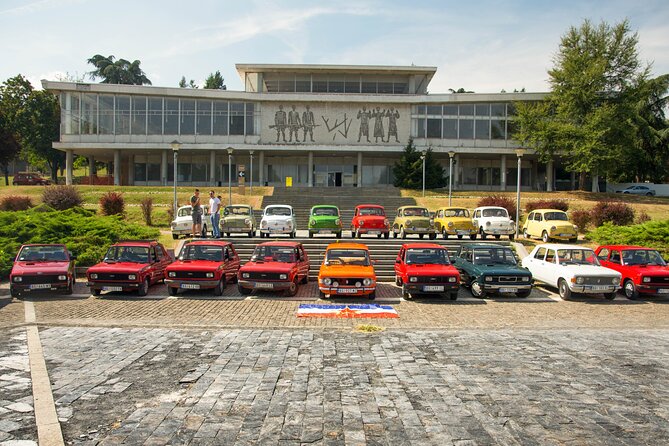
The main indoor experience is the Museum of Yugoslavia. The best way to understand it is this: it is not a typical “start to finish” history museum. It has a distinct origin, and the organization is still influenced by that.
The museum’s core was founded in 1962 to collect gifts given to Tito. These gifts came not only from Yugoslavia, but from many world leaders. After Tito’s death, the museum was merged with multiple related sites, including the House of Flowers, plus several residences and lodges such as the Residence, Pool House, and Hunting Lodge, along with the Old Museum and the tomb of Josip Broz.
The collection is huge. It notes over 200,000 items, categorized into 20 collections.
You get about 40 minutes here, with admission included. That time is enough to get a sense of the scope and structure, but not enough to read every object detail from top to bottom. So go in with a mindset of selective looking. Pick a few sections that grab you and focus there.
Why this stop is a highlight, even if you’re not obsessed with Tito: it’s a tangible way to see diplomacy, celebrity, and political symbolism turned into objects. And because you’re on a vintage car-themed tour, your guide can connect the museum’s era to the car culture side of the day, including why the Yugo story lands the way it does.
Practical tip: museum time can run slow if you stop to read everything. If you want the car story as well, don’t try to see everything. Concentrate on the parts that connect to the era.
The Yugo Story: Why That Car Plotline Matters
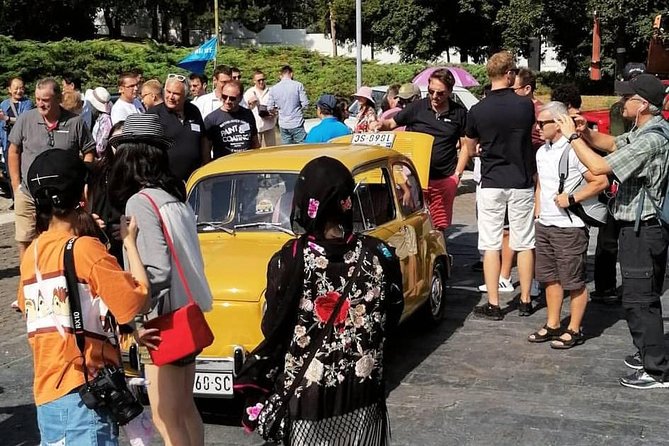
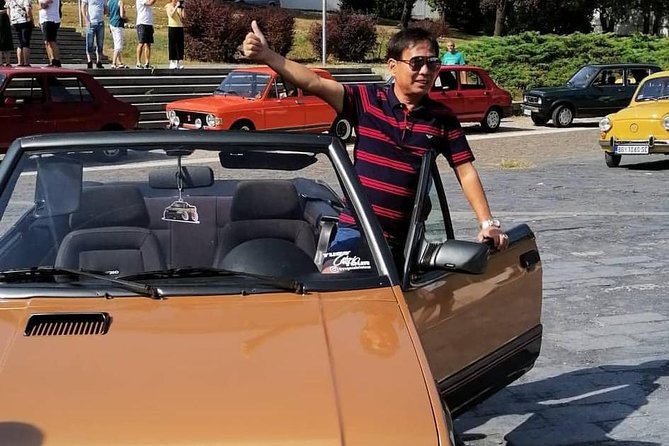
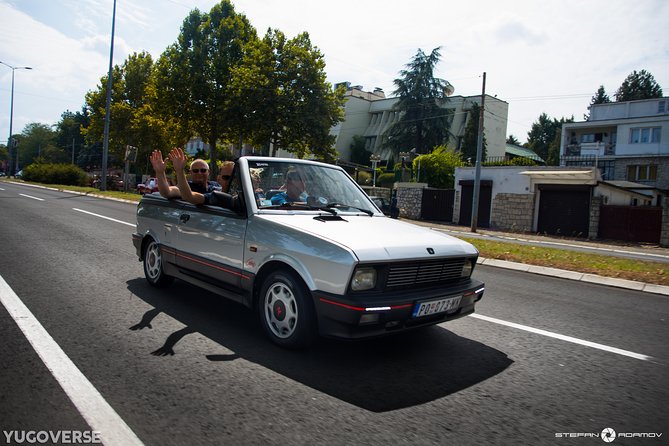
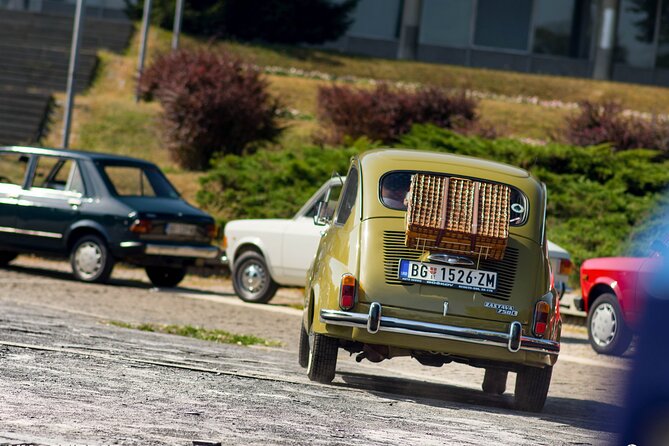
The tour’s central thread is the vintage Yugoslav cars, with a specific focus on the Yugo, including the Yugo convertible. The way it’s described is that some people call it the worst car in the world, which gives you a built-in hook.
But the useful part is not the punchline. The useful part is what the guide can help you understand: how a single car became a symbol. A car like this can reflect manufacturing priorities, economic pressures, and design decisions in a way that pure history talk cannot.
On a tour like this, the Yugo theme also works as a memory aid. You’ll walk between architecture and political landmarks, then anchor the story with a very specific product from the era. That’s a real help when you’re trying to remember what Belgrade looked like in the decades that shaped the city.
And because it’s private, your guide can match the level of technical or cultural explanation to what you want.
Logistics That Make It Easier Than DIY
This tour is built to remove friction. You can show up at the meeting point, or you can request pickup. You get snacks and soda during the ride. You also get the reassurance that fees are taken care of, so you don’t end up hunting for ticket lines or scrambling with small cash.
The tour is also marked as private, meaning only your group participates. That matters because it keeps the timing smoother. You spend less time waiting for a crowd, and your guide can keep the narrative flowing at your group’s pace.
Another practical point: the activity is near public transportation and allows service animals. Most people can participate, but you still should expect some walking and standing during short stops.
Who This Tour Suits Best
This tour is especially good if you fit one of these profiles:
- You like Belgrade and want a short, structured way to hit major landmarks.
- You enjoy cars as culture, not just as machines.
- You’re interested in Tito-era artifacts and how politics shows up in everyday objects.
- You appreciate architecture, especially brutalism and modernist design.
It may feel like less of a match if you want a long museum visit or deep interior access at every stop. The museum is the main indoor time. The other landmarks are more about context and views, with some interiors only shown through photos.
Should You Book Tito and History Vintage Car Tour?
Yes, I’d book it if you want a guided Belgrade experience that mixes three things: cars, architecture, and Tito-era context. The price makes more sense because the tour covers entry costs, includes snacks and soda, and gives you a private guide who can keep the story coherent across several stops.
The strongest selling point is the human one. The guide, Jovana, comes across as passionate and genuinely invested in the material. In a city where history can feel dense, that kind of clarity makes the difference.
If you’re traveling with someone who loves cars but you also want landmark variety, this is a smart compromise.
FAQ
How long is the Tito and History Vintage Car Tour?
It runs for about 2 to 3 hours.
Is pickup available, or do I need to meet somewhere?
Pickup is available if you request it. Otherwise, you can start at the meeting point: Dragoslava Jovanovića 14, Beograd 11000, Serbia.
Is this tour private?
Yes. It is a private tour, and only your group participates.
What’s included in the price?
The tour price is listed as $144, and it includes snacks and soda. It also states that all fees are taken care of, so you should not need to pay anything on the spot.
Do I need to buy tickets for the museum and other stops?
The tour indicates admission for several stops is free and that museum admission is included. It also notes that all fees are handled, so you should not be paying on the spot.
Do you provide a mobile ticket?
Yes, you receive a mobile ticket.
When will I get confirmation after booking?
You receive confirmation within 48 hours of booking, subject to availability.
What if the weather is bad or I need to cancel?
The experience requires good weather. If it’s canceled due to poor weather, you will be offered a different date or a full refund. You can cancel for a full refund up to 24 hours in advance.
Latest write-ups around Belgrade
- Private Wine Tasting by Party in Belgrade★ 5.0 · 3 reviews
- Private Half Day Serbia Tour Novi Sad and Petrovaradin Fortress★ 5.0 · 3 reviews
- Belgrade: The White Emigration in Serbia in the Wake of the Russian Revolution★ 5.0 · 3 reviews
- From Belgrade: Private Nis and Devil’s Town Full-Day Tour★ 4.0 · 4 reviews
- Private Walking Tour of Belgrade and Old Zemun★ 5.0 · 3 reviews
- Belgrade center walking tour with Rakija, Cocktails and Burgers★ 5.0 · 4 reviews
- From Belgrade:Uvac Nature Reserve Tour★ 5.0 · 4 reviews
- Novi Sad Saturday Full day trip★ 4.0 · 4 reviews
Historical Tours, side by side.
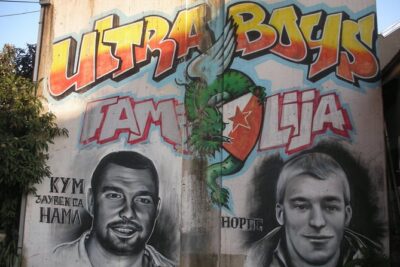
Football tour: Red Star and Partizan Ultras History
Read our review →

Full-Day Private Royal Heritage Tour to Oplenac With a Winery Visit
Read our review →The lists this tour appears in